1. Introduction
[1.1] There are sleeper hits—and then there's the meteoric rise of the low-budget Canadian TV show Heated Rivalry (2025–), whose commercial, critical, and fannish success seems nearly unprecedented. It is difficult in today's mediascape of streaming and social media to experience shared audience responses, but within a month of its premiere, the show was reviewed and analyzed across mainstream media and show references became a cultural touchstone for brands ranging from IKEA to Tim Hortons to Red Cross Canada; the actors presented at the Golden Globes and were torchbearers for the 2026 Winter Olympics. Likewise, the creative fandom responses across social media are astounding: In the five months since the season finale, fan creators have posted about 225 new fan works a day on the Archive of Our Own (AO3), and many stories receive thousands of comments, tens of thousands of kudos, and hundreds of thousands of views.
[1.2] Heated Rivalry should be utterly niche: a gay fuck buddies–to-lovers romance featuring competitive professional hockey players. Covering a decade of their relationship, the show features little hockey and a lot of (sometimes kinky, always explicit) gay sex. It's well scripted and filmed and acted, but a highly explicit gay sports romance is certainly a niche product. Yet audiences loved the show—men and women, gay and straight, hockey fans and those who had to google "power play" and "hat trick." And while media critics, TV reviewers, and show lovers are trying to understand their responses and analyze their feelings, fan fiction fans are having an uncanny sense of recognition. This is slash on screen—all the character dynamics, all the skipping timelines, all the tropes, and, of course, all the emotionally charged sex and intimacy. Reading through the many articles and blog posts, listening to podcasts, and watching social media videos feels like all the fannish and academic work within and surrounding slash fandom have finally, finally mainstreamed. And it only took twenty, forty, sixty years.
[1.3] Twenty years, approximately, since a group of slash fans decided to create the nonprofit Organization for Transformative Works (OTW) to build an archive to host fan fiction—regardless of fandom, pairing, or rating. Forty years, or thereabouts, since the first academic publications analyzed the particular appeal of slash pairings: Patricia Frazer Lamb and Diana Veith's "Romantic Myth, Transcendence, and Star Trek Zines" (1986) explains the unusual gender politics of primarily women writers depicting explicit male/male (m/m) love stories of true partners and equals; Joanna Russ's "Pornography by Women, for Women, with Love" (1985) discusses slash's particular mix of romance and pornography. Sixty years, nearly, since Jennifer Guttridge's "The Ring of Soshern" (1968)—a Star Trek novella (and possibly the first slash story) in which Kirk and Spock are marooned on a hostile planet when Spock goes into Pon Farr—was written and circulated.
[1.4] "Slash" is an important fannish term whose meaning has shifted over time (Busse and Lothian 2017; Neville 2018; Kustritz 2024). Historically, slash has been used to describe fan fiction with romantic and/or (often explicit) sexual relationships between (presumably straight) male characters. Named after the punctuation mark that was used as divider between the two characters in a relationship in stories featuring m/m pairings, slash was often excluded by other media fans, leading to separate zines, cons, mailing lists, and archives. Into the early aughts, slash was a subtextual reading characterized by specific styles and tropes, and slash fans and academics explored the genre's explicit sex and gender ideologies: the female gaze, the desire for equal and balanced relationships, and the themes of erotic fantasies and romantic and emotional intimacies. The new millennium's social and political climate—more accepting of both gay romance and women's interest in porn—created a changing media landscape with more readily available gay couples on screen at the same time as fandom exploded with ever greater public awareness and easier online access. As a result, fan fiction expanded exponentially: numerically, stylistically, and thematically. For the purposes of this essay, I use the term slash in its narrower sense as m/m fan fiction that tends to obey specific stylistic and genre tropes.
[1.5] Heated Rivalry as a TV series is clearly indebted to slash, both in its literary pedigree and in its visual sensibilities. Rachel Reid's Game Changer book series, which inspired the show, is MM romance—a book category that came to prominence in the late aughts and expanded quickly with the rise of self-publishing and a publishing industry trying to become more inclusive (https://www.out.com/entertainment/2010/08/17/w4m4m). Slash, with its particular tone and thematic preferences, is all but encoded in MM romance; many of the earliest examples of same-sex romance with explicit erotic scenes were written by fan fiction writers—many building on their previous fan works (Woledge 2005). Professional MM romance inherited stylistic features and narrative tropes as well as controversies surrounding the genre. Slash communities had long debated the problem of potentially fetishizing sexual minorities, but commercial publishing altered the stakes and exposed the fault lines of (supposedly) straight women writing gay romance—and making money and winning awards (https://www.autostraddle.com/writers-gone-wild-lambda-literary-awards-spark-debate-on-the-future-of-gay-books-90580/). Heated Rivalry further mainstreamed these conversations as online discussions relitigated the clash of women's sexual fantasies and gay representation.
[1.6] While a lot of the initial discussions traced Heated Rivalry's popularity and appeal to Boys' Love or gay cinema, I'd argue that the show's central features are more closely related to slash, with its focus on explicit fantasies, professional equality, erotic intimacy, and meaningful nonverbal communication. These tropes filtered via Reid's MM romance into Jacob Tierney's television adaptation, which embraced and expanded them. Slash is a textual celebration of queer identities, bodies, and sexual pleasures, but it is also a mode of reading and interpreting absences, of shifting focus to the hidden and nonverbal, and of reimagining stories that were not commercially viable. Reading Heated Rivalry through the lens of slash genre tropes allows us to articulate and explain many of the more unusual aspects of the show, such as its odd pacing, lack of narrative action, lingering cameras and unusual framings, extremely long sex scenes, and seemingly dated stories of the closet.
2. Narrative of the interstices
[2.1] The basic plot—as seen so often in fan fiction—is fairly simple: Two exceptionally talented ice hockey players begin their professional careers as stars on traditionally opposing teams. They are cast as rivals in a media narrative that foregrounds their contrasting personalities: restrained, self-controlled, scandal-free, introverted, focused, neurodiverse Asian-Canadian Shane Hollander with loving and supportive parents, and promiscuous, extroverted, scandalous, highly aggressive Russian party boy Ilya Rozanov with an abusive family. They begin a sexual relationship that must remain hidden, not only in the hostile homophobic environment of professional sports but more so as supposed enemies. The show covers nearly a decade of clearly sexually satisfying but emotionally confusing hookups where both men at times try to push for a more defined relationship, yet run scared in turn. By the end of the TV series and after nearly a decade, they finally admit their feelings and begin to plan for a future together.
[2.2] What this plot summary cannot encompass are all the moments of sex, intimacy, disappointments, and anger that the characters (and the viewers) experience along the way. Heated Rivalry opens with young Shane Hollander and Ilya Rozanov meeting for the first time. Onscreen text provides context: "December 2008, Regina, Saskatchewan, International Prospect Cup." These two and a half minutes establish the format for the rest of the episode, which covers the next thirty months in brief clips marked by time and place. These scenes are all but an inversion of traditional storytelling: They give little context, skip all conventional narrative development, and instead linger on every moment the two characters meet. Hockey games are condensed into handshake lines, awards events into brief shots of photo ops. Compare that to the eight-minute-long scene of meeting in Shane's apartment and having anal sex for the first time.
[2.3] Heated Rivalry, like fan fiction, exists in the spaces between the big events and actions, in the private and intimate moments. Where genre shows favor external action and focus on the dramatic events in the workplace (be the characters space explorers, international spies, or first responders), their fan fiction tends to look at the private lives, the friendships and romantic entanglements, and the physical and psychological toll that is mostly condensed or passed over in the show. Fan fiction fills in the missing moments: It explores the thoughts, feelings, and personal interactions, often expanding brief scenes in canon into long meditative musings. This dichotomy remains in place in Heated Rivalry—but without a preexisting canon, viewers only get the missing scenes. The important moment may be a record-setting skills competition, testifying to their talent and rivalry, yet the show focuses on Ilya inviting Shane to his room on the rink, displaying both their need to meet up and the risks they take in front of other players. And six minutes of sex.
3. Porn as plot
[3.1] Many reviews in popular media outlets focus on the conundrum of a show that is hypermasculine yet intensely emotional, sexually aggressive yet carefully tender with seemingly indifferent but clearly emotionally attached characters. This is romance in its most basic genre definition: a story that traces the growth of a relationship from the meet-cute through a variety of internal and external obstacles, ending with a HEA (happily ever after) for the couple. But it's also gay explicit sex for many minutes in each episode. Slash historically occupied a nebulous space between traditional het romance and commercial gay porn to create a noncommercial alternative to both—thematically and stylistically merging the explicit erotics of porn with the emotional fantasies of romance (Driscoll 2006). Romance and pornography are not only necessary but also inextricably linked elements of slash and Heated Rivalry.
[3.2] Heated Rivalry and slash share a hyperfocus on the body, its sensory input, its motions, and how the protagonist feels about these sense-experiences. Slash fans collectively and carefully study on-screen physical interactions in order to generate and justify their subtextual interpretations. The slash story then repeats and expands these interactions, which explains part of the intense physicality of many slash stories: The detailed account may be of physical fights or exercises, the suffering of injury and illness, or the intimacy of caresses or fucking—but in all cases there tends to be a strong emphasis on the physical movements and, more importantly, how experiencing and observing them makes the characters (and, by extension, the readers) feel. Detailed physicality serves as a metaphor for the couple's relationship and often signifies emotional intimacy. Sex scenes, for example, can be incredibly explicit, but the emphasis often tends to be on sense experiences—smell, touch, taste—and unlike a lot of commercial pornographic writing, it is not simply the mechanics but also the feelings about them and the emotions on which they are based and which they evoke. In other words, it may be the detailed description of giving a blow job, but it's also an intimate account of the character's thoughts, feelings, fears, and hopes.
[3.3] Slash fan reading practices of film and television often privilege body language over actual dialogue. Slash is physical and embodied in a way that often feels visual rather than textual, that works in images as much as it does in words. Francesca Coppa argues that fan fiction ought to be understood as theatrical and performative rather than textual and literary: "Fan fiction directs bodies in space even when it's not overtly written in theatrical form... We know who these characters are...and we bring our memories of their physicality to the text" (2006, 229). Early in the show, Shane and Ilya end up silently competing against each other on adjacent stationary bikes in a hotel gym in the middle of the night. The scene clearly illustrates their competitive streak as well as their constant physical awareness of one another. This is only amplified in the conversation after—out of breath, they both sink to the floor and discuss the cities they've been drafted to that day. In most shows, the conversation would be the focus and fans would find small looks, gestures, almost touches to create a narrative of curiosity, attraction, and desire. Heated Rivalry pictures all these moments in detail: Their shoes almost touch, their eyes hold for moments too long, their fingers connect as they pass the water bottle (figure 1). And the camera focuses and holds the moment, lingering on a close-up of touch and connection.
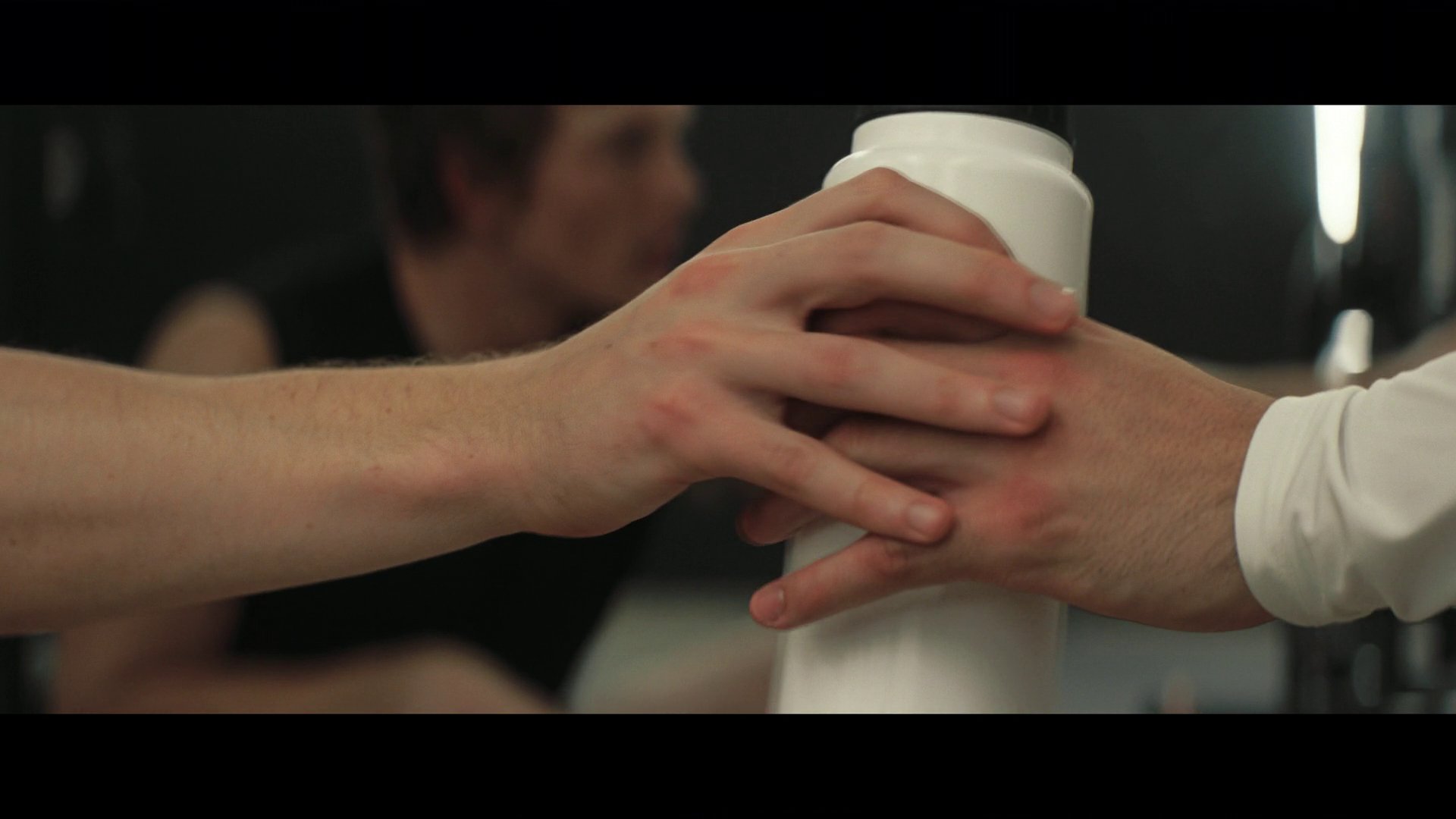
Figure 1. Screenshot of camera zooming in on hands on a water bottle (Heated Rivalry 1.01).
[3.4] Like slash, which is defined by its explicit sexual scenes that are not gratuitous but central to plot and/or characterization, Heated Rivalry tells its story in and through sex. Accordingly, the passion and intimacy of their encounters, the close-ups of face—during, and maybe even more crucially, after sex—the physicality of tender touches during sex, all tell stories about secret yearnings, desperate needs, and growing feelings that are obvious to viewers long before either of the characters dares to even entertain the possibilities. Heated Rivalry replicates that intersection of physical and emotional intimacy: One of its most remarkable aspects is the intense nonverbal communication throughout all of Shane and Ilya's encounters, but especially in their sex scenes. In fact, the intimacy of sex often precedes any acknowledgment of their emotional connection; it's clearly easier for both to communicate physically than verbally, easier to let themselves fall asleep in the same bed than to use first names.
[3.5] The show visually connects sexual and nonsexual moments: One montage that covers two years of their relationship in four minutes features hockey, including two Stanley Cup wins, and exercise, clubbing, and commercial advertisements, all of it interspersed with text messages and sex scenes. Their relationship develops in their public and private lives: the physical exhaustion of exercise and sex, the intimate contact of hockey and sex, the emotional connection of texting and sex. The intimacy of their relationship is often visually characterized in physical encounters that mirror their sexual ones: When they finally admit that they are not just casually fucking, Shane climbs on Ilya's lap to hold and comfort him. They sit on the bed, fully dressed, but in a position that fully mimics their sexual encounters. Likewise, Shane effortlessly dropping to his knees to blow Ilya in their first sexual encounter is repeated several times in the show, only to become an image of emotional intimacy and vulnerability in the final episode when Shane drops to embrace Ilya's legs after being discovered by his dad (figure 2). These repetitive mirror images indicate that the extensive sex scenes are not gratuitous, but essential—a central characteristic of slash where sex scenes are often foundational to exploring characters and their dynamic.
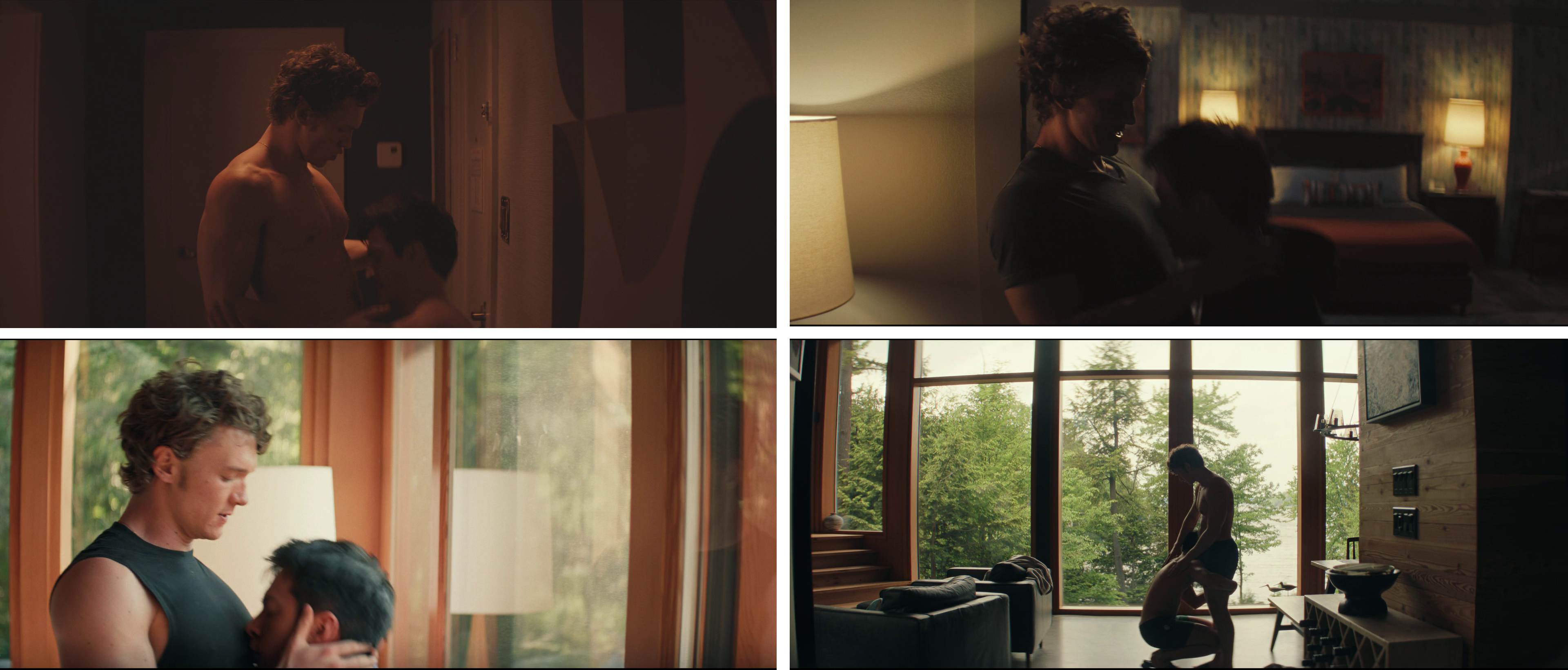
Figure 2. Set of screenshots of Shane on his knees in front of Ilya (Heated Rivalry 1.01, 1.02, 1.06).
[3.6] In lieu of actual conversations or voice-over commentary, Heated Rivalry uses touches and gestures, facial features and bodily composure to reveal (often unacknowledged) feelings. There is a continuous disconnect between what the characters think they feel and what the audience realizes they actually feel: They constantly insult each other verbally while smiling (or kissing), so that "boring" and "asshole" become terms of endearment. Similarly, their bodies and faces often have a conversation independent of their words: They may negotiate blowjobs in a public bathroom but the gentle gestures, the way one character's entire body follows to not break contact suggest not just desire but emotions. Slash often describes such sense-experiences in loving detail—not only in sex scenes but also in nonsexual scenes. Combat, sports, dance, or other physical encounters feature sense perception, sense memory, and an extended focus on physical awareness. Slash tends to favor shows where bodies are highly toned and specialized tools, often weapons—the nonverbal signals of a police raid, the fluid motions of Jedi fighting together and in sync, even the collaborative nature of team sports all foreground a shared embodied nonverbal language that anticipates, supports, and symbolizes the embodied sexual relation for these slash pairings.
4. Escaping the slash closet
[4.1] It is not incidental that the characters in Heated Rivalry are closeted and, in Shane's case, has long refused to even acknowledge his sexual identity. Slash as a genre thrives on discovering, exploring, and interpreting hidden gestures; but historically, it tended to exist apart and outside of gay male community, culture, and spaces (as it was written by and for women primarily). Responding to mainstream media texts with traditionally heteronormative heroes, slash imagines same-sex romance and sex, but it does so oftentimes in secrecy. In the story, the relationship exists in the interstices of the action shown on screen, and this stealth is often not only an integral plot point but also a desirable fantasy. Even when mainstream culture begins to feature gay characters and couples, other prohibitions prevent the most popular slash pairings to be open about their love—both legal prohibitions like the military chain of command and cultural prohibitions including familial and religious expectations. More than that, there is a clear erotic charge in the absolute secrecy and mutual interdependence between the slash couple. It's a way of reading visual narratives to find gay secret clues as much as it is the stories that then decipher and explore these hidden messages. And while Heated Rivalry as a source text is clearly creating a fandom where all the sex is right there on screen, as a slash text, it presents as the inter- and extrapolation of a secret romance between rival sports stars. Its very genetic makeup is defined by secrecy and the closet. It is not coincidental that the final episode features "The Cottage," Shane's refuge from the world in the middle of the Canadian wilderness, where he invites Ilya to come to his house because, "It's so private. No one will know."
[4.2] Shane's cottage is the updated version of the Canadian Shack, a 2001 multifannish fan fiction challenge. Its creator describes it: "I was hanging around in a chatroom and we were talking about how all Due South stories seemed to end up in a Canadian shack. And then we decided that, really, all fandoms ought to end up in a Canadian shack" (https://fanlore.org/wiki/Canadian_Shack_Fic). At its conclusion, it resulted in more than a hundred stories by thirty writers in sixty-two fandoms. While the challenge on its surface is about getting strange pairings together and strange fandoms to Canada, it implicitly celebrates the absolute seclusion from any professional, familial, or communal environment: Two men in a shack divides out the outside world and all its cultural attachments. These short moments of isolating two protagonists in a remote primitive location humorously reflects on the many ways slashers sequester their central pairing for conversation, revelations, and sexual explorations.
[4.3] More importantly, these insulated, isolated, tight spaces offer enforced intimacy at the same time as they force the world, others, norms, rules, and even civilization with all its expectations to stay out. The shack is effectively a closet of two. The men can be open about their needs and desires within these walls, can reveal and revel in their intimate emotional and sexual encounters; and yet, while protecting them from a hostile outside, this shelter also removes them from a supportive community of others. The shack is an ideal representation of the early slash trope: openness only in secrecy, enforced intimacy in extreme situations, and an intense bond due to its singularity. The fan fictional closet often was an unavoidable part of early slash—for the characters as much as for the fans themselves. But even as slash fan fiction and its fans have mainstreamed, the trope remains popular: The closeted couple continues to be slash's fundamental unit in many stories' thematic, structural, and semantic focus. Indeed, many popular slash tropes circulate around these concepts that celebrate, if not fetishize, this intense relationship that creates singular emotional, intellectual, and physical ties.
[4.4] Heated Rivalry's Canadian Cottage unknowingly recalls the Canadian Shack yet moves beyond that: We first have the shack/closet where the emphasis is on drowning out the world that threatens their love and finally being able to stop hiding and focusing on one another. But then the show moves beyond the claustrophobic intimacy of the closet to create a queer fantasy ending: Shane's parents accept (and all but expect) his gay identity; they embrace Ilya as family; and they organize an actionable plan for their professional futures. With its happy ending but even more so with its extended presentation of gay love and sexuality, Heated Rivalry offers a queer romance that embraces pride and joy, mirroring the decades of shared queer pleasure in slash texts and the surrounding communities. Beyond the emotional charge of genre romance, the show celebrates intimacy and pleasurable sex and caring lovemaking; and it does so even when the relationship is casual and nonmonogamous. Enjoying sex beyond the male gaze is radical, but even more so when it's queer sex, and Heated Rivalry (like the much less mainstream but nevertheless revolutionary Queer as Folk [2000–05] before it) forces audiences to behold and share that joy—at length.
[4.5] The immense popularity of Heated Rivalry and the way it has become part of the early 2026 cultural discourse (not just in popular culture and commercial spaces but also in sports and even politics) suggests a paradigm shift for slash fan fiction fans. After more than half a century of hiding zines under the table at conventions and needing separate discussion groups and fan fiction archives online, after seeing straight fan fiction turn into book bestsellers and Hollywood movies, slash fans suddenly are seeing their specific genre of fiction on mainstream television; seeing their decade-long debates about their desires reflected in opinion pieces in mainstream publications; and seeing their own well-worn discussions on female desire, gay appropriation, and anatomic realism revived in random TikToks and Reels. If the story of Heated Rivalry explored sexual fantasy and the pleasures of the closet only to explode that trope and leave us with Shane and Ilya coming out and driving in broad daylight into a hopeful future, then its existence and reception explodes the very concept of slash itself, of the need for a separate space for reading and writing gay explicit love stories of characters we already know and love. And while their stories until now were only told in the interstices of mainstream shows where fans had to zealously piece together the small moments out of much larger narratives, Heated Rivalry has catapulted into the open the particular appeal of slash fan fiction, its sexual and romantic fantasy, embodied emotions, and intimate idealized partnerships.