1. Introduction
[1.1] Despite praise for its representation of homosexual relationships, Anne Rice's
Interview with the Vampire (
IWTV) can be hostile in its representation of race, with the narrative's black characters either fearing or lusting after white vampires (Adams 1999). While antiblackness is a point of tension in the original 1976 novel, the film adaptations of Rice's works set themselves apart by casting nonwhite actors as vampires, with Spanish-Latino actor Antonio Banderas and black singer-actress Aaliyah both taking on bloodsucking roles in the franchise (
note 1). Although the films' casting diversity did not completely remove the racist stereotypes that have plagued the franchise since its inception, the AMC television adaptation (2022–) notably shifts the narrative center toward blackness. Reimagining the plantation-owning protagonist, Louis de Pointe du Lac, as a queer black man in 1910 Jim Crow New Orleans, the narrative centers on racial segregation and antiblackness at the core of the character's connection to his vampiric powers and the series's thematic investments (Nyong'o 2023). With several iterations spanning decades, the
IWTV fandom is multigenerational within the vampiric genre, attracting a unique cohort of gothic and emo enthusiasts, vampire aficionados, and queer romance fans (Fathallah 2021). Like other fandoms, it is also full of interpretive discrepancies, with depictions of race in fan-created works becoming a particularly divisive point. This came to a head in 2024, when a group of UK cosplayers visited the set of the 1994 film adaptation, Oak Alley Plantation in Louisiana, for a photoshoot styled as the AMC adaptation of the characters, using a white Funko Pop doll as a representative of Louis rather than a black cosplayer. As one fan responded, "Breaking news:
IWTV fans are raecist [
sic]" (
note 2). News to some, and definitely not to others, the
IWTV fandom demonstrates a challenge toward nonblack fans who create transformative content about black characters without considering the implications of race, capturing an often unspoken dimension of fandom. While not all fan practices are intentionally racist, race is always an aspect of fan interpretive and creative practices, even when not explicitly foregrounded (Pande 2024; Rouse et al. 2024).
[1.2] The absence of a black cosplayer in the photoshoot not only positions Louis's race as a decorative and ultimately unnecessary aspect to the character but also limits engagements with blackness as a site of textual insight. While its counterhegemonic potential has been central to narratives of transformative fandom for years, nonwhite fans have pointed to how these practices reinforce racialized narratives, enabled through an unspoken relationship to whiteness (Pande 2018). This is often achieved through a post-racial logic, the notion that contemporary culture has evolved beyond discussions of race. Instead, the post-racial relegates racial identity to a kind of ornamental representation that relies on whiteness as a nonracialized neutral (Squires 2014). The post-racial is one tenet of Western multiculturalism, the belief that globalized progress facilitates the intermixing of different cultural backgrounds. In conversation, post-racial multiculturalism articulates a heterogeneous community unified by a shared sense of overriding cultural values often coded as white (Fortier 2007). Multiculturalism places whiteness as the determinant of "acceptable difference," with the post-racial enacting a process of assimilation into these values through dismissing racialized cultural markers (Ahmed 2004). In the transcultural and transnational space of
IWTV's digital fandom, where multiculturalism is often a community norm, post-racialism enacts a specific language of transformative potential that prioritizes whiteness as an invisible standard, leading to substantive erasures of the black characters.
[1.3] While the relevance of a post-racial ethos shifts with the sociopolitical moment, I turn to this terminology because of its utility in describing a type of politics that can be enticing to some in moments when heightened racial awareness is read as a symptom of social rupture. Here, I focus on post-racial multiculturalism constructed through affect, or the cultural narratives that surround different emotions and define how the body can be in contact with other beings and objects (Ahmed 2004). I examine the management of affective orientation to explore how some fan media, intentionally or otherwise, rely on whiteness as a framework of textual meaning. This lends itself to acts of transformative normalization, a practice that reinscribes white hegemonic norms as the language of fan insight by maintaining a conservative way of knowing, rather than exploring alternative imaginings, potentials, and futures. Challenging assertions of fandom as inherently counterhegemonic, reading for transformative normalization underscores how whiteness is positioned as the default for fan practices, limiting discussions of race even for texts that seem to encourage such engagement.
[1.4] As seen in the example above, transformative normalization is a visual preference for the aesthetic of whiteness within a legacy of enslavement. Ultimately, this instance of fan engagement bypasses the ethical and affective issues of a plantation photoshoot through a post-racial logic that positions the black body as an acceptable absence to assuage racialized discomforts. The remainder of this analysis will focus on a case study of fan edits or vids for the AMC adaptation of
IWTV. While the series seems to invite conversations about race and representation, I argue that some fans utilize the edit as a way of minimizing readings that explore the consequences of racialized oppression and violence. To avoid speculation on the racial identity of the fanbase of
IWTV, I focus on how the fan objects rhetorically situate the show's characters through the trope of the diva, directing what narratives are permissible and which need to be contained, ultimately orienting nonwhite characters toward whiteness as the point of textual meaning. While the diva has historical ties to queer communities of color, I examine post-racial evolutions of the term to offer insights into how transformative normalization upholds hegemonic logics despite language that seems engaged with racial and gendered politics (Moore 2018). Reading for transformative normalization in
IWTV, I am not only interested in how racism operates in fan spaces, but in how some transformative works treat the black body as fungible in the interpretation of a narrative invested in the legacies of racial violence (P. Johnson 2019). I begin by providing an overview of transformative normalization as a framework for addressing race in fan media before analyzing three iterations of the diva in
IWTV: the high diva, the popular diva, and the black diva. I conclude by offering remarks on the utility of transformative normalization in fan scholarship.
2. New neighbors
[2.1] Transformative normalization is an interpretive framework employed through fan practices that changes or reorients potentially "excessive" racialized, gendered, and sexual moments toward more acceptable versions of difference, thereby centering whiteness in the enactment of fan love and participation. Whiteness is a project of securing cultural, political, and economic currency through narratives of happiness and other positive emotions, prioritizing particular objects, narratives, and beliefs based on their alignment with the neoliberal state (Ngai 2005; Bonilla-Silva 2018). Whiteness's presence in alleged post-racial spaces relies on maintaining a barrier to entering into a cultural landscape, accepting superficial racial difference as long as nonwhite bodies uphold whiteness as the ideal ideological power (Nakayama and Krizek 2009). In some fan spaces, this can be particularly impactful in audience participation. As fans transform and secure interpretations of characters deemed "at risk" of transgressing social codes of happiness, some prioritize narrative outcomes often equated with whiteness, such as the monogamous middle-class family (Ahmed 2010). This invests in the right kinds of affective contact between characters, which prioritizes positive relationships while "associating the failure to love difference with the origin of racism and violence" (Ahmed 2014, 139). Read through post-racial articulations of progressive representation, the happy, loving conclusions that populate some transformative works signal not only individual character dynamics but also social progress, furthering an association between relational failure and the histories of racism (Busse 2013). Discussions of race as a significant framework for understanding cultural multiplicity and interpersonal dynamics become bound by the notion of an outgrown origin, labeling the recognition of race as a diversion from a loving future of what now matters.
[2.2] While loving difference is central to scholarship that situates fan practices as inherently progressive because of its connection to personal desire, scholars have troubled this account by highlighting how racialization and whiteness influence fan spaces (Warner 2015; Wanzo 2015; Lothian and Stanfill 2021; Pande 2024; Brown 2024; Rouse et al. 2024). Scholars like Coccia highlight how practices of "too-close reading" magnify desirable elements while neutralizing choices not directly aligned with those wishes, thereby replicating hierarchies that make "wealthy, white histories legible, leaving others unclaimed and unrecognized" (2022, ¶ 3.5). While transformative fandom in particular has developed a reputation as "excessive" and "indulgent," Stanfill describes how these associations are framed as "correctable," becoming one pathway for securing whiteness through the reinstatement of a dominant cultural norm (2011, ¶ 4.1). Although not directly addressing fandom, bell hooks reminds us that while pleasure can offer pathways for imagining alternative futures, these desires cannot be accepted uncritically (2000). Reading for transformative normalization problematizes the mechanics of fan media and practices, attuned to the ways fan subjectivity is not encapsulated by personal preference but is also an iteration of racialized cultural practices.
[2.3] Adjusting, reframing, and containing a media object central to a fan community, transformative normalization amplifies how fans deploy creative practices to position an object—or at least an interpretation—as a pathway for safeguarding a relationship to whiteness. If race, read through associations with an archaic social hierarchy, is tied to a logic of unhappy exclusion, then accessing whiteness through transformative fandom acts as one method for acceptance into post-racial multicultural futurity. The invisibilizing force of whiteness in transformative normalizations relies on the notion that these texts are always already available to normative readings. Minimizing the potential losses of these changes, transformative normalization relies on the assumption that whiteness goes all the way down. With this in mind, I turn to fan edits on TikTok to highlight how this relationality to whiteness produces and secures the post-racial within fan spaces, articulating how the logic of transformative normalization manages diversity within fan spaces.
3. Don't be afraid, just remix the tape
[3.1] Dating back to VCR editing practices in the 1970s, edits, an extension of the fan vid, are a practice of utilizing TikTok and related platforms to incorporate new or remixed sound and visual elements to convey a particular argument, affective connection, or political engagement (Russo and Coppa 2012; Freund 2018; Coppa 2022). Existing in a seemingly endless algorithmic scroll, the accessibility of transformative media for both casual audiences and self-identifying fans places the edit in overlapping contexts, both within the fandom and broader platform trends. While edits can materialize various textual insights, they are particularly useful for facilitating controlled engagements with "perversion," enabling the pleasurable practice of reveling in while defining the boundaries of acceptable taboo (Winters 2012). The editor does not solely establish the rhetorical balance between taboo and social norms, as the interpretative conventions of the fandom and the social media platform itself also support engagement with particular tropes and figures (Turk and Johnson 2012). As the management of taboo intertwines with storytelling practices, fan edits have the potential to complicate categories such as race, gender, and sexuality. These forms are also vulnerable to reproducing and reinforcing hegemonic values that may already exist among fans and on the platform, inseparable from preexisting cultural narratives.
[3.2] Close describes the edit as a space of "re: reflecting, reworking, refeeling, rewatching, and redoing," emphasizing how pleasure authorizes textual play and transformation (2016, ¶ 8.2). This fosters an understanding of a beloved narrative that is based not only on the text itself but also on its surrounding context. By focusing on the post-racial, I argue that some fan edits rhetorically contain and direct differences toward hegemonic narratives, assimilating differences into preexisting cultural narratives informed by normative whiteness as the ideal form of desirable, loving fan participation. In the next section, I present a case study of
IWTV to argue that the trope of the diva functions as a conservative interpretative framework, compartmentalizing moments of interpersonal violence through the more tolerable, and at times celebratory, language of diva behavior. Bypassing readings that engage with these moments through a framework of race, diva edits assimilate nonwhite characters into a legacy of predominantly white media objects, perpetuating rather than interrogating narratives of multicultural love within the show and fandom. Using diva rhetoric, fans can signal their status as members of the community, positioning themselves within their own vision of the media object and among other fans online. As such, the diva edit, as both a fan practice and trending terminology on social media, is a critical site for studying how practices of transformative normalization manage racial differences in contemporary media and their reception, which prioritizes whiteness as a stabilizing force for both a text and a fan community.
4. The curtain opens
[4.1] Set in the 1900s in Louisiana, post-WWII Paris, 1970s San Francisco, and 2022 Dubai, AMC's
IWTV follows Louis de Pointe du Lac (Jacob Anderson), an immortal black Creole vampire interviewed by white journalist Daniel Molloy (Eric Bogosian). Interweaving Louis's account of events with diary entries from his vampiric companion, a black girl named Claudia (Bailey Bass), season 1 follows Louis's life in Louisiana with his lover/maker, Lestat de Lioncourt (Sam Reid), a white Frenchman newly arrived in the United States. As season 1 concludes with Louis and Claudia's attempted murder of Lestat and escape to Europe, season 2 follows the pair in Paris as they join a vampiric coven/theater troupe. Haunted by Lestat, Louis starts a new relationship with the vampire coven's leader, Armand (Assad Zaman). However, previously unknown vampiric law sets Louis and Claudia (now played by Delainey Hayles) at odds with their new vampiric family. Ending in a surprise trial for crimes against vampire society, season 2 concludes with the return of Lestat and the execution of Claudia. During the retelling in Dubai, Louis, with Daniel's help, uncovers lapses in his memory, unveiling previously forgotten elements of his relationships with Lestat, Claudia, and Armand.
[4.2] As Louis's personal history is recounted and then challenged by outsiders' perspectives,
IWTV explores how interracial queer relationships are disrupted through violations of trust perpetrated by vampiric power. To briefly share a few examples: Louis's vampiric strength leads to extreme acts of physical violence against Lestat; Lestat hides his vampiric power of flight, only revealing his ability after dropping Louis from an extremely high distance; and Claudia and Louis utilize a shared telepathy to plan Lestat's murder without his knowledge. While it is possible to read
IWTV as a story solely motivated by queering the normative family unit, when the television series foregrounds race in its casting, scripting, and setting, there is an invitation to read the familial dysfunction through a racialized lens. In shifting the narrative center toward blackness, the vampire can be read as a dilemma for the Other who is expected to assimilate into loving normativity in exchange for powers historically connected to whiteness in a Western context. When this expectation is rejected, the black vampire is seen as wreaking havoc on the loving future of multiculturalism as narrated by white supremacy. As Nyong'o describes, "
Interview (2022) doubles down on the use of horror as the genre best suited to depict the terrors of white supremacy…If terrifying tales of neo-slavery like
Interview with the Vampire didn't exist, afropessimism would have to invent them" (2023). Under a regime of violence,
IWTV situates post-racial multiculturalism within an ever-present legacy of slavery permeating Western society. Fans negotiate readings of the show with/against these histories, providing both avenues for identifying racist practices (as seen in the introduction) and/or replicating hegemonic discourse often obscured in the name of desire (as seen with the diva).
[4.3] Like the vampire, the diva is a figure meant to be interviewed. Another cultural icon of the Romantic period, the diva subverts gendered expectations of success by firmly appreciating their talents as sites of authority. While divas were initially identified as white female opera singers, queer communities adopted the term to describe a wide array of female celebrities who command attention in popular culture, particularly through interviews (Draper 2017). The diva defines a particular relationship between fans and icons, with the potential to encompass a multitude of meanings while remaining ultimately ambiguous in their specificities (Jennex 2013). With this in mind, I highlight the diva as a rhetorical framing device that captures and describes the emotional resonance between fans and a narrative's characters. What's important here is not what emotions the diva describes, but how emotions are mediated through the figure. While the diva's racial identity influences the icon's manifestation and affordances, stereotypes of the diva draw on images of a strong-willed, brass individual. However, the conflicts that can arise from their self-centered behavior do not expel them from the community; rather, their domineering attitude confers star quality, simultaneously isolating them as individuals while grounding them as community figures. As such, the diva functions as a method of containment, mediating extravagant individualism while maintaining community ties. While the diva can be selfish, egocentric, and interpersonally ignorant, the potentially adverse effects of their behavior become more tolerable due to their position as an icon who illuminates cultural norms and, at times, trivializes the experience of social difference. Under post-racial multiculturalism, the diva is a strategy of incorporation, where selective difference becomes a site for management and, therefore, inclusion as a cultural figure.
[4.4] In the next section, I identify three uses of the diva trope in
IWTV edits on TikTok: the high diva, the popular diva, and the black diva. I constructed these categories through the discursive and visual analysis of the edits, their captions, and the comment sections, focusing on videos posted after the release of the series's second season. To maintain the privacy of the fans, I anonymized the edits discussed and removed direct citations. These edits represent a sample of a broader discourse on transformative normalization, as found through analyzing the archive of fan edits under #iwtvedits and other related tags. While not exhaustive, other fan spaces have shown similar patterns, such as Apple TV's
Severance (2022–) and Netflix's
Squid Game (2021–5). Focusing on
IWTV, I argue that the diva mediates affect as a means of maintaining white supremacy within multiculturalism, directing diversity toward contained, normative readings.
5. Category one: High diva
[5.1] High diva edits blend
IWTV's characters, particularly Armand, with Romantic-era and other Western paintings featuring diva-esque iconography. In this instance, the diva is a visual tool, based on paintings that have attracted popular readings invested in individualized gender and sexual politics as facilitated by Western art. While the connection between Armand and European art is also featured in the original novels, in the television adaptation, which features a Delhiite Armand, this description gains an additional quality that foregrounds the character's lack of agency as an object of racialized visual desire. Conversely, the fan edits utilize multiculturalism to direct nonwhite perspectives toward classical white art. In edit one, this directionality is achieved in the overlay of European artwork, including (but not limited to) Sandro Botticelli's
Saint Sebastian (1474), Alexandre Cabanel's
The Fallen Angel (1847), and Auguste Toulmouche's
The Reluctant Bride (1866), directly on top of Armand's body (figure 1). Pulling different moments from season 2 that highlight Armand's complicated relationship with ceremonial loving service, the audio discusses Armand's history as a vampire, particularly underscoring his positions of slavery/service to those he deemed as higher beings. Aligning Armand's eyes with the resigned stare of the reluctant bride or the frustrated gaze of Lucifer, the edit concludes with the line, "Who am I Louis? Am I my history I've endured? Am I the job I do not want? I do not know anymore. No one has painted me in over 400 years." This moment in
IWTV reveals Armand's disconnect from life and his desperation to be seen, a desire mirrored by Louis's drive for an "accurate" interview. Commenting on the complex relationship between one's sense of self and larger social structures, this moment in
IWTV might lend itself to exploring the impacts of racialized structures of servitude. However, with the addition of classical (white) artwork on top of Armand, transformative normalization functions to minimize race while simultaneously fetishizing and compartmentalizing his body into frames comparable to those of the paintings: His chest is like the painting's chest, his eyes are like these eyes, his expression, and so on.
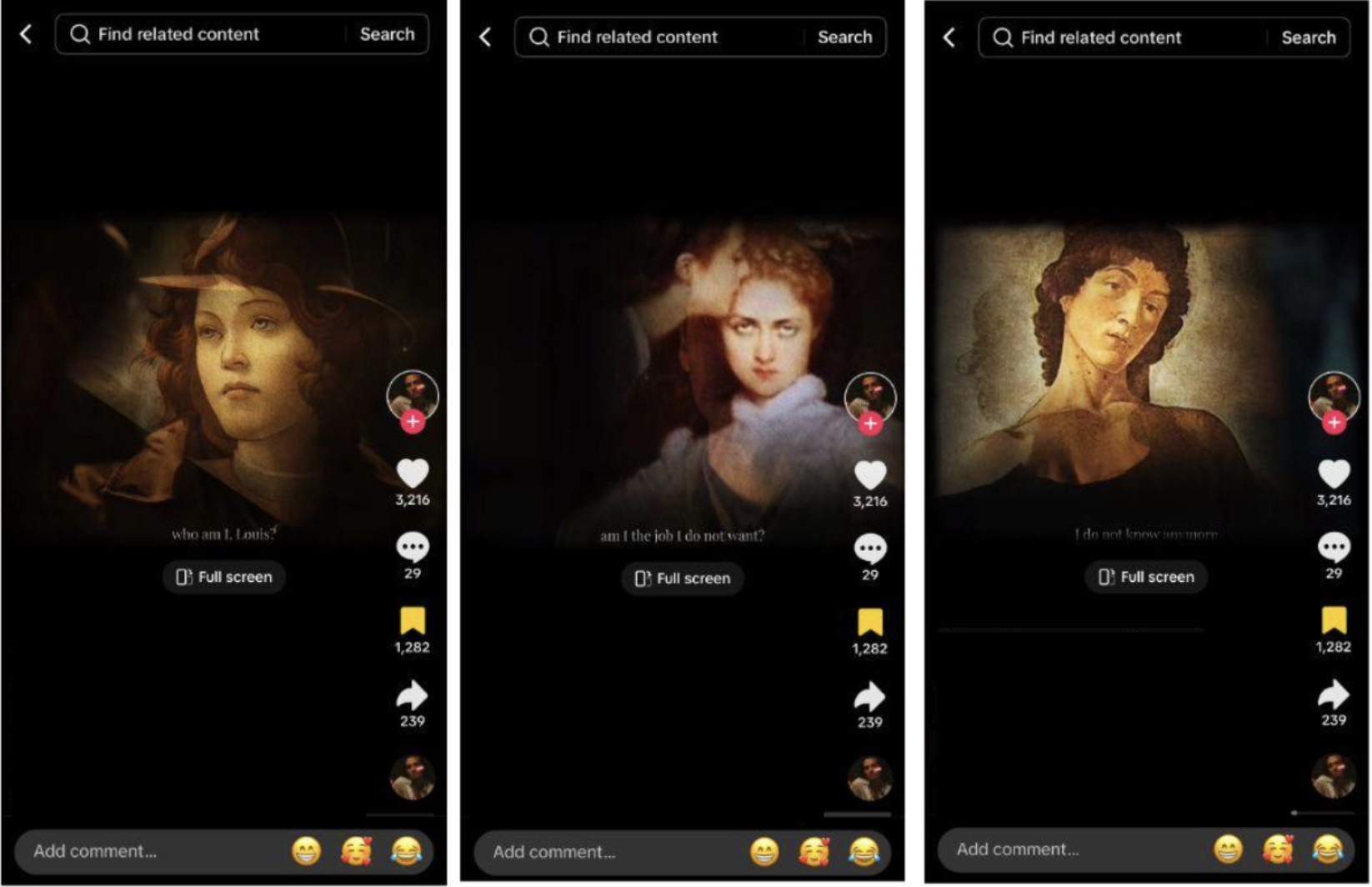
Figure 1. Armand and classical art (TikTok Creator 1, July 18, 2024).
In this instance, transformative normalization operates by compartmentalizing race and demarcating the recognition of affect through whiteness. LeMesurier highlights how Asian bodies, in particular female Asian bodies, are partitioned by their features for consumption under white supremacy, an aesthetic that "only ever requires minor modification" (2022, 254). Similarly, the partitioning of Armand's body with European paintings directs the Asian body toward whiteness, which requires only a slight correction in this comparison (a darkening of the skin tone). The bulk of the transformation occurs on Armand's body, which becomes physically erased and replaced by the white portraiture. By disrupting the continuity of Armand and reorienting his features toward the artwork, whiteness acts as a bonding force that resituates these comparisons, erasing or minimizing Armand's identity through the transformation of his body. The racialized body is both a celebrated component that triggers the initial characterization and an element that is quickly overturned, maintaining the white artwork as the central feature that provides additional nuance to Armand's character. Read through the lens of transformative normalization, race is decentralized as a site of insight into Armand's affective connection to labor, an element overlooked by privileging whiteness as an assumed neutral, totalizing space of comparative potential.
[5.3] Edit two similarly features key narrative moments overlaid with high art. Focusing on moments of extreme anguish, this edit recontextualizes the emotions of those seen as social outsiders, utilizing artwork such as Sir Frank Bernard Dicksee's
The Mother (1907) and Max Ginsburg's Renaissance-inspired
War Pieta (2007) to place the characters' reactions within a canon of white feeling (figure 2). Drawing on scenes of personal struggle—for example, Louis clinging to a dying Lestat or scenes from Claudia's execution—this edit showcases performances of intense feelings that are rewritten or repressed within the show's narrative. Bypassing the complex emotional response of the
IWTV characters with paintings of weeping white mothers or despondent European martyrs, transformative normalization in this edit not only validates Western culture as an all-encompassing language of feeling but also circumvents the nonwhite perspective through the literal erasure of their bodies. Commenting on the misrecognition and rejection of black feeling, Palmer discusses how white supremacy produces black affect as "
unthinkable…always already excessive, inadequate, or both" (2017, 33). Translating excess into the hegemonic iconography of the Western canon, these edits lend themselves toward whiteness as the site of known affect, as moments of excess become more tolerated when expressed by white faces. By compartmentalizing the nonwhite characters and their emotional responses, the high diva edit addresses how social difference is reincorporated into dominant cultural narratives through whiteness as a site of affective intelligibility. Racialized characters become feeling subjects through their ability to be translated into whiteness, their bodies becoming whole through the substitution of whiteness that not only reconstructs but also contains their feelings within white articulations of emotion.
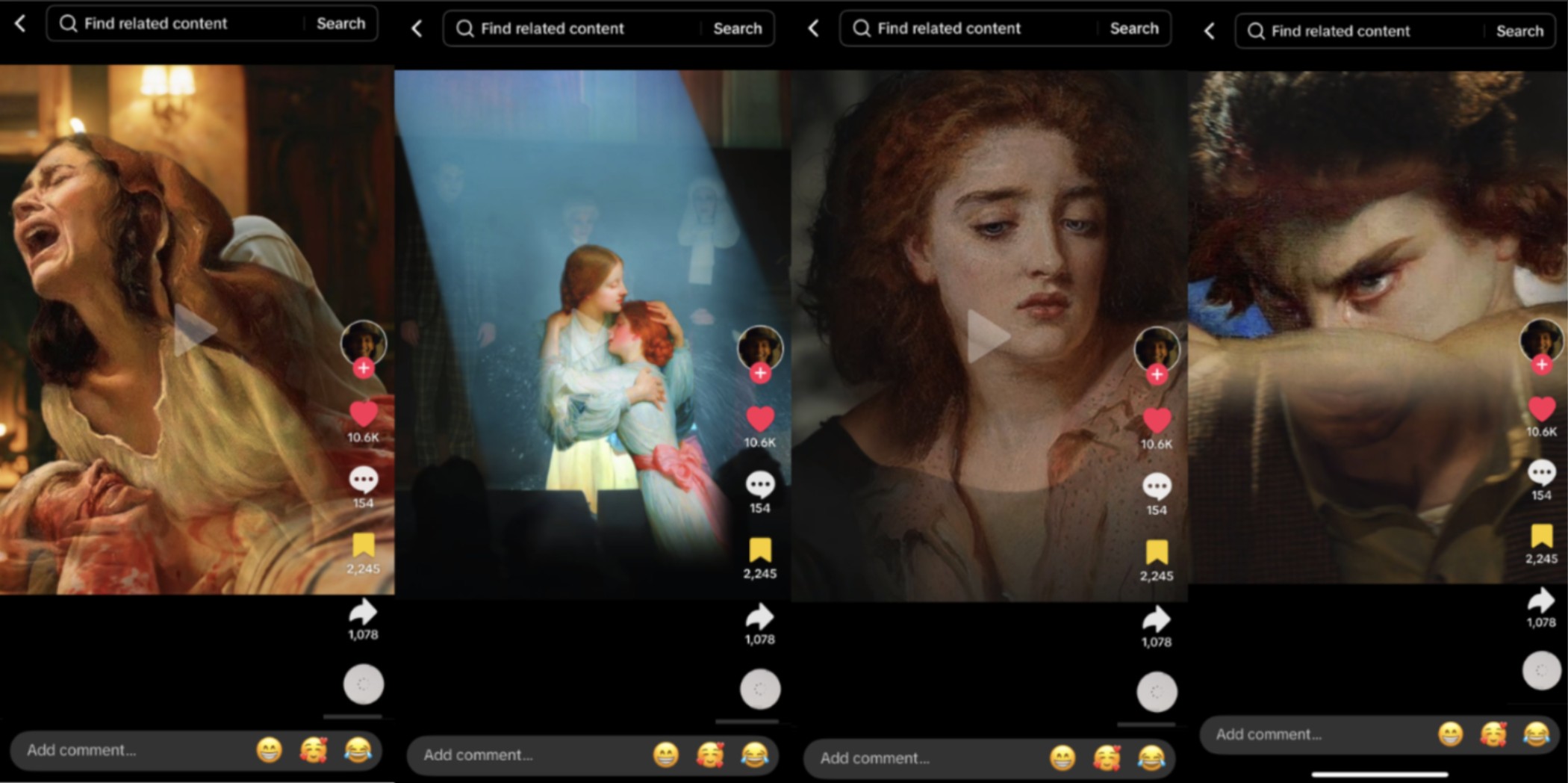
Figure 2. From left to right: Louis holding Lestat; Claudia holding Madeleine; Armand; and Louis (TikTok Creator 2, February 27, 2025).
When asked directly about the whitewashing of the characters, the creator of the second edit responded by saying, "None of this is about race, it is about how the scenes or expressions resemble the paintings." Another commenter came to the editor's defense, saying, "This post was created with nothing but artistic intentions. It doesn't matter the race, but instead the facial expressions and body movements between the actors and the ppl in the painting. Please stop" (
note 3). Not only do these responses underscore the treatment of race as a nonfactor: Race ends the conversation. It is the unthinkable, a literal demand to stop. Coppa describes how this stoppage responds to a larger trend within Western vidding culture where "white vidders will re-edit the text to alter the gaze, create new sexual relationships, queer the text—and leave problems of race untouched" as a way to reify whiteness as the orientation of fan happiness in spaces of digital multiculturalism (2024, ¶ 1.5). Rather than focusing on the actual transformations or hierarchies produced within the edit, fans discuss the artistic intentions of the editor. This discourse manages the interpersonal dynamics of fandom through the assumed neutrality of desire, highlighting how transformative normalization operates by removing race as a substantial category of insight. Drawing on Wanzo, one outcome of this discussion is the creation of a space that positions whiteness as a universal from which fandom can operate, excluding questions of race under the guise of commentary (2015). Here, claims of racial indifference prioritize whiteness as the metric for community inclusion, stability, and security. Challenging these measures, then, raises questions not only about what can be commented on in interfan behavior but also about which elements of a show's narrative are accessible to transformation at the cost of inclusion within the fandom itself.
6. Category two: Popular diva
[6.1] The second edit grouping I highlight is the popular diva edit. These edits primarily compare
IWTV characters to other popular characters labeled divas. Beyond the chosen iconography, what separates the popular diva from the high diva is how the figure addresses different textual moods. While the high diva largely manages somber scenes or depictions of painful emotions, the popular diva often carries a more celebratory affect. Transformative normalization not only manages the appearances and interpretation of pain but also the reception of pleasure. Here, diva functions as both a discursive and a visual category, found in both the edits' visuals and their comment sections. Rooted in the audience's intertextual knowledge of Western popular culture, these edits cross lines of gender and race to foster a sense of post-racial, post-gender multicultural inclusion. Read through transformative normalization, these edits underscore a particular femininity in the
IWTV characters, with whiteness positioned as the intersection where these similarities are actualized. The popular diva draws comparisons between
IWTV characters and other diva characters, primarily white women, trivializing potential insights into the motivations of their
IWTV counterparts through bypassing race as a category of analysis. For example, in edit three, we see a comparison between Armand and Sharpay Evans from the
High School Musical franchise (2006–8) (figure 3). This edit juxtaposes scenes of Armand directing the vampire theater troupe, a role he later uses to orchestrate Claudia's trial and execution, with clips of Sharpay reigning over the school halls and country club employees. Presenting Armand as comparable to Sharpay Evans—a high school theater starlet—contains the vampire's authority and later betrayal within the language of diva behavior.
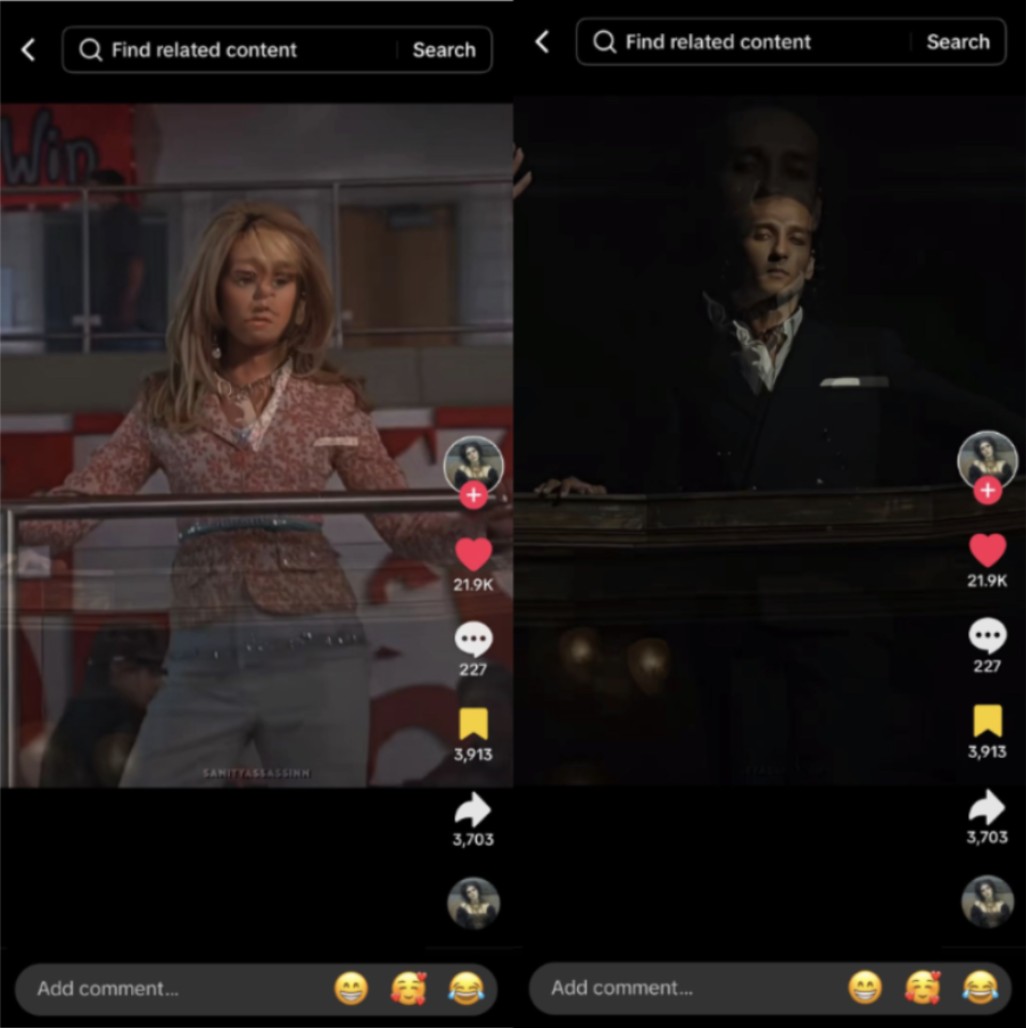
Figure 3. Armand as Sharpay Evans from High School Musical (2006; TikTok Creator 3, September 4, 2024).
By comparing his actions to those of Sharpay, Armand is positioned as ultimately unthreatening, relegated to descriptions of dramatic, theatrical, and bossy, thus detaching him and his actions from the deadly violence later enacted on Claudia. In the comment section, fans praise the visionary comparison, commenting on the hyperspecific reading of both the characters and fans themselves. As one fan put it, "No one ever understood my brain like this tiktok [
sic] I think" (
note 4). Transformative normalization reveals how Armand is recontextualized within the intelligibility of white womanhood. This magnifies particular elements read onto his character (for example, theatricality) while minimizing the transgressiveness of his agency in betraying Louis and Claudia. Validating a tactical relationship to whiteness within the narrative and the edit itself, the dynamics of Armand's betrayal, informed by racial and gendered hierarchies, become trivialized in the comparison to Sharpay, flattened into excessive individualism disconnected from racial and gender dynamics. Additionally, by proclaiming personal identification in this edit, transformative normalization manifests as a unique fan experience while remaining structurally normative in manufacturing a narrative that aligns with rather than contests preexisting cultural narratives.
[6.3] We can see a similar pattern in edit four, which compares the
IWTV characters to the main cast of the film
Mean Girls (2004). Positioning Louis as the new-girl-turned-narcissistic-leader, Cady Herron; Armand as the power-hungry follower, Gretchen Weiners; and Lestat as the popular queen bee, Regina George, this edit recasts
IWTV through the lens of petty high school drama. Looking specifically at the Louis/Cady comparison (figure 4), the clips from
IWTV draw from a season 1 moment in which Louis and Lestat fight over their relationship. While the conflict initially centers on whether they should try nonmonogamy, the argument shifts to Louis accusing Lestat of ruining his life by turning him into a vampire. The scene encapsulates a significant conflict between Louis and Lestat. On the surface, the character tensions might be read as Lestat's desire for Louis to fully immerse himself in vampire life and Louis's resentment of Lestat for isolating him from his humanity. It is also suggestive of racialized power dynamics within interracial relationships, coded for Louis's feelings of separation from the black community due to his relationship with Lestat, who expects that he sublimate his blackness within vampiric whiteness to find happiness. The edit condenses this moment to Cady's line from
Mean Girls: "It's not my fault you're like in love with me or something," followed by a series of clips featuring Louis and Cady set to the song "DECKED" by vaporchrome remixed with the song "Eat It" by trans artist Ayesha Erotica. The song captures an oversaturated beat that enacts the visual switch between the characters. Through comparing Louis to Cady, the edit engages transformative normalization to position this conflict as exterior, a disagreement between two people about their relationship, rather than a conflict over Louis's devolving sense of self as a result of his relationship with Lestat. At this moment, transformative normalization describes how the depths of this argument and its racialized subtext are restricted by bypassing the role of race in shaping the power dynamics between Louis and Lestat.
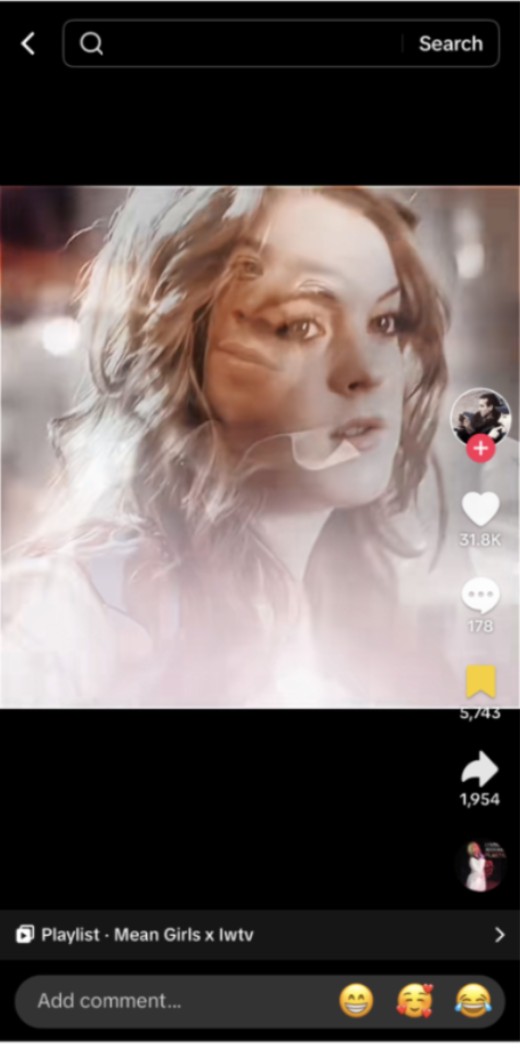
Figure 4. Louis as Cady Heron (played by Lindsay Lohan) from Mean Girls (TikTok Creator 4, September 30, 2024).
As in the prior edits, the creator positions Cady over Louis, centralizing whiteness in the foreground of these comparisons. The comment section of this video, similar to the previous edit, oscillates between exclaiming the "randomness" of the comparison while also commenting on its exactness. In doing so, transformative normalization reveals how the diva performs particular work to specify Louis's relationship with Lestat along lines of affective intelligibility familiar to whiteness by removing race from the connection's specificity through a post-racial comparison focused on similar personality traits. The specificity of these claims operates on the assumed neutral ground of whiteness. Race is simultaneously too specific to allow comparison, yet not specific enough to distinguish the different positionality of these characters within their respective narratives.
[6.5] Sexuality in edit four is framed as central to both Louis and Lestat, an affective drive that causes those around them to become "in love or something." The authority of black masculinity is undercut in this comparison, which situates the black gay man as failing to seize hegemonic patriarchal power. Furthermore, the edit's focus on Louis's sexuality through the comparison to a white woman further situates post-racial multiculturalism within the homonormative (E. P. Johnson 2003). In their tendency to expect queer couples to act, behave, and look like their heterosexual counterparts, these edits perpetuate normative white supremacy by recoding the male characters as female, further containing multiculturalism within white heterosexual expectations of relational monogamy and marriage (Halberstam 2005). Critiques of homonormativity, offered by scholars like Reid-Pharr (1996), Stallings (2019), and Allen (2022), underscore the particulars of Louis's intersectional identity as a black gay man living in a society that simultaneously fetishizes and punishes black men for their assumed heterosexual prowess. Comparisons to Cady produce normative articulations of this identity by centralizing white femininity in interracial relationships. Transformative normalization addresses how Louis's race is positioned as superfluous in this comparison, dismissing blackness as a site that recognizes the lived complexity of intersectional identity beyond post-racialism (Crenshaw 1989). While readings of Louis as a feminine gay man are not inherently engaging white homonormativity, in this example, Louis's intersectional identity is positioned as encapsulated by a comparison to a canonical heterosexual white woman. As such, gender inversions enable cross-gender identification, or at the very least comparison, through a post-racial understanding of the character's positionality within their respective narratives. In doing so, the diva manages interracial contact, highlighting an assumption that all homosexual couples are able to or at least should desire the roles and aesthetics of a heterosexual nuclear family, positioning racialized blackness as a site where these values can be contested. Reading for transformative normalization, we can see how race becomes excluded when it challenges the assumptions of post-racial multiculturalism, revealing the limits of what relationships are allowed, what conflicts are permissible, and which need to be insulated by whiteness.
7. Category three: Black diva
[7.1] The final category of diva edits I examine is the black diva, focusing on Beyoncé's song "Diva." With the chorus lyrics "Diva is a female version of a hustla," these videos differ from other diva edits by centralizing the voice and vernacular of a black woman. The Beyoncé song places the diva in relation to labor and black excellence, exploring how the language surrounding black lives is read as excessive under systems of white supremacy (Lordi 2017). In conversation with Beyoncé's song, in queer black spaces, the black diva is an icon of survival, resisting normative pressures by relying on one's own strength and values. In doing so, the black diva creates their own community spaces, a beacon for those who see their fabulous resilience as an alternative path (Moore 2018). Edits for
IWTV vary in their approach to this history. Some of Louis's edits, for example, connect the character to the hustler figure, a role he seems to fulfill in season 1. However, these edits not only feature Louis's work in Louisiana but also address his interpersonal relationships, using diva rhetoric to describe his treatment of the other characters. This results in a reading of hustler behavior not defined by black experiences of physical labor under white supremacy, but how labor manifests in his interpersonal relationships with his family, friends, and coworkers. As such, diva rhetoric spotlights the excess that results from systems that cannot recognize blackness beyond the limits of white supremacy, especially as it relates to the recognition of black labor. By centralizing black voices, the diva celebrates this excess, using it as the defining quality of Louis's character and connecting him to a history of black queer play that challenges gender roles, sexuality, and social expression (Moore 2018).
[7.2] However, in edit five, we see how this celebratory affect can still solidify around antiblack stereotypes. This edit takes a scene from season 2 in which Louis disrupts Daniel's authority as an interviewer by asking about his ex-wife. Cutting to a series of clips of Louis to Beyoncé's song, the beat of the music initiates transitions between scenes. In the caption to edit five, the editor writes, "louis dont end him like that omg [
sic]," framing blackness as something that brings death or "an end" to the other characters as a result of Louis's perspective on the narrative (Wilderson 2017). While potentially ironic, this comment speaks to the control over taboo through the medium of the fan edit. Rhetorically positioning the fan's response to Louis's actions as a kind of distanced permission, the edit and its caption both indulge in the disruptive behavior while also setting fans apart from its enactment. Transformative normalization constrains the capacity of Louis's character to be transgressive, framing his insights as managed by the fan editor, who rhetorically situates his actions as ultimately undisruptive to his connection with the other characters. In a scene that could be read as a moment of black insight into the life of a white man, transformative normalization underscores how the diva works to contextualize this moment as a self-involved ending to community dialogue. Diva rhetoric marks Louis's insights as a perspective on the narrative that individualizes and contains its producer, trivializing Louis's comments as a means of repressing moments of social rupture and disrepair. In the comment section, fans express their enjoyment of the character, proclaiming a love for Louis's blackened insight, made recognizable through the simultaneous use and containment of racialized stereotypes that signal Louis's perspective as an initiator of social death, contained through transformative normalization.
[7.3] Louis is not the only one to receive the Beyoncé treatment, as Lestat is also featured in diva edits to the song's lyrics. As the character who overlaps the most with operatic diva iconography, the diva for Lestat functions similarly to the other characters, containing moments of violence while minimizing the threatening quality of Lestat's influence. In edit six, we see a remix of a season 1 scene in which Lestat ignores Claudia's distress over vampiric immortality and lack of companionship. This edit uses Beyoncé's audio to recontextualize Lestat's control over the vampiric transformation process as a form of theatrical self-importance. In a moment of white control over black bodies and livelihood, the Beyoncé lyrics invoke the very thing Lestat is subjugating, containing Lestat's authority within the quality of diva while obscuring the role of race in this relationship. Through positioning black femininity as the defining characteristic of these characters, while not centering black female characters, transformative normalization highlights how black femininity is treated as a tool for community building within the series and the fandom, simultaneously using these characteristics as optional components that can be applied to characters regardless of the bodies or identities present.
[7.4] The caption for this video, "cant take her [Lestat] anywhereeee omg [
sic]," alongside the comment section's lighthearted discussion of Lestat's faux pas, categorizes the character as disruptive but ultimately unserious. Similar to the prior edit, this comment offers both ironic support and condemnation of Lestat's behavior. Unlike Louis's diva edit, where his ability to enact change is defined by a fan-controlled social death, Lestat is given penultimate influence over the other characters. Cutting away before the character's reaction to Lestat, the edit moves between clips to the beat of the song. Beyoncé's music directs Lestat's characterization while excluding the black bodies he influences. With parallels to the interchangeability found in the story that introduced this analysis, in this example, the video frames the white gay man as a replacement for the black woman, erasing the particulars of both identities in favor of an assumed equivalence that enables the white gay man to overtake the black woman as the visual icon of diva behavior. Transformative normalization complicates the structural influence of whiteness, minimizing the harm of Lestat's actions by magnifying his personhood, excluding the perspectives of those who bear the weight of this normalization.
8. Conclusion
[8.1] Reading for transformative normalization in fan practices problematizes the narratives that associate happiness with an unbiased, apolitical site of desire. Although
IWTV does not entirely reject the trope within the show's narrative, the diva edit performs particular work in coding the relationships between the characters, validating whiteness as a form of containment despite textual investments in the histories of racial violence. While the diva is not exclusively represented as white, the case studies above highlight how diva rhetoric manages the inclusion of race, often resulting in the exclusion of blackness as a site of unnecessary social conflict. Beyond this example, transformative normalization marks how fans rhetorically situate differences with/against dominant cultural readings. Despite texts that encourage investments in race, reading for transformative normalization highlights how fan works can rely on post-racial multiculturalism as a measure of social progress while maintaining whiteness as the central factor of the edit's creative decisions. Demarcating lines of power tempered through notions of loving engagement, transformative normalization reveals how race, when left unaddressed, does not move beyond hegemonic scripts but continues to provide insight into the narrative world and its adoption by audiences.
9. Acknowledgments
[9.1] Thank you to Dr. Avi Santo for his feedback across the many iterations of this paper and Dr. E. Chebrolu for his feedback on the first draft. I also wish to thank UNC graduate students Jacob Kenton Smith and Abel K. Gutierrez for their incredible writing advice and support.
11. References
Adams, Jessica. 1999. "Local Color: The Southern Plantation in Popular Culture." Cultural Critique, no. 42 (Spring): 163–87. https://doi.org/10.2307/1354595.
Ahmed, Sara. 2004. "Affective Economies." Social Text 22 (2): 117–39. https://doi.org/10.1215/01642472-22-2_79-117.
Ahmed, Sara. 2010. The Promise of Happiness. Duke University Press.
Ahmed, Sara. 2014. The Cultural Politics of Emotion. Edinburgh University Press.
Allen, Jafari S. 2022. There's a Disco Ball Between Us: A Theory of Black Gay Life. Duke University Press.
Bonilla-Silva, Eduardo. 2018. "Feeling Race: Theorizing the Racial Economy of Emotions." American Sociological Review 84 (1): 1–25. https://doi.org/10.1177/0003122418816958.
Brown, David Sterling. 2024. "Baldwin, Shakespeare, Whiteness, and (Anti)Fandom: 'What's Love Got to Do with It?" Transformative Works and Cultures, no. 43. https://doi.org/10.3983/twc.2024.2717.
Busse, Kristina. 2013. "Pon Farr, Mpreg, Bonds, and the Rise of the Omegaverse." In Fic: Why Fanfiction Is Taking Over the World, edited by Anne Jamieson. Smart Pop.
Close, Samantha. 2016. "Fannish Masculinities in Transition in Anime Music Video Fandom." Transformative Works and Cultures, no. 22. https://doi.org/10.3983/twc.2016.0713.
Coccia, Emily. 2022. "Femslash Fandom and the Cultivation of White Queer Genealogies: Longing for Histories, Reading for Futures." In "Fandom Histories," edited by Philipp Dominik Keidl and Abby S. Waysdorf, special issue, Transformative Works and Cultures, no. 37. https://doi.org/10.3983/twc.2022.2225.
Coppa, Francesca. 2022. Vidding: A History. University of Michigan Press.
Coppa, Francesca. 2024. "Vidding and the Oppositional Gaze: The Pleasures of Critique." In "Centering Blackness in Fan Studies," guest edited by Alfred L. Martin Jr. and Matt Griffin, special issue, Transformative Works and Cultures, no. 44. https://doi.org/10.3983/twc.2024.2611.
Crenshaw, Kimberlé W. 1989. "Demarginalizing the Intersection of Race and Sex: A Black Feminist Critique of Antidiscrimination Doctrine, Feminist Theory and Antiracist Politics." University of Chicago Legal Forum, Article 8: 139–67.
Draper, Jimmy. 2017. "'What Has She Actually Done??!': Gay Men, Diva Worship, and the Paratextualization of Gay-Rights Support." Critical Studies in Media Communication 34 (2): 130–7. https://doi.org/10.1080/15295036.2017.1288916.
Fathallah, Judith. 2021. "Sex, Race, and Romanticism: The Meta-Vampire in Emo Fandom." Journal of Fandom Studies 9 (3): 253–73. https://doi.org/10.1386/jfs_00044_1.
Fortier, Anne-Marie. 2007. "Too Close for Comfort: Loving Thy Neighbor and the Management of Multicultural Intimacies." Environment and Planning D: Society and Space 25 (1): 104–19. https://doi.org/10.1068/d2404.
Freund, Katharina. 2018. "'Becoming a Part of the Storytelling': Fan Vidding Practices and Histories." In A Companion to Media Fandom and Fan Studies, edited by Paul Booth. Wiley Blackwell.
Halberstam, J. Jack. 2005. In a Queer Time and Place: Transgender Bodies, Subcultural Lives. New York University Press.
hooks, bell. 2000. "Eating the Other: Desire and Resistance." In The Consumer Society Reader, edited by Juliet B. Schor and Douglas B. Holt. The New Press.
Jennex, Craig. 2013. "Diva Worship and the Sonic Search for Queer Utopia." Popular Music and Society 36 (3): 343–59. https://doi.org/10.1080/03007766.2013.798544.
Johnson, E. Patrick. 2003. "The Specter of the Black Fag: Parody, Blackness, and Hetero/Homosexual B(r)others." Journal of Homosexuality 45 (2–4): 217–34. https://doi.org/10.1300/J082v45n02_10.
Johnson, Poe. 2019. "Transformative Racism: The Black Body in Fan Works." In "Fans of Color, Fandoms of Color," edited by Abigail De Kosnik and andré carrington, special issue, Transformative Works and Cultures, no. 29. https://doi.org/10.3983/twc.2019.1669.
LeMesurier, Jennifer Lin. 2022. "Race as Supplement: Surfaces and Crevices of the Asian Feminine Body." Quarterly Journal of Speech 108 (3): 251–70. https://doi.org/10.1080/00335630.2022.2088841.
Lordi, Emily. 2017. "Surviving the Hustle: Beyoncé's Performance of Work." Black Camera 9 (1): 131–45. https://dx.doi.org/10.2979/blackcamera.9.1.08.
Lothian, Alexis, and Mel Stanfill. 2021. "An Archive of Whose Own? White Feminism and Racial Justice in Fan Fiction's Digital Infrastructure." Transformative Works and Cultures, no. 36. https://doi.org/10.3983/twc.2021.2119.
Moore, Madison. 2018. Fabulous: The Rise of the Beautiful Eccentric. Yale University Press.
Nakayama, Thomas K., and Robert L. Krizek. 2009. "Whiteness: A Strategic Rhetoric." Quarterly Journal of Speech 81 (3): 291–309. https://doi.org/10.1080/00335639509384117.
Ngai, Sianne. 2005. Ugly Feelings. Harvard University Press.
Nyong'o, Tavia. 2023. "Out of the Closet—and into the Coffin." Public Books, April 18. https://www.publicbooks.org/out-of-the-closet-and-into-the-coffin/.
Palmer, Tyrone S. 2017. "Otherwise than Blackness: Feeling, World, Sublimation." Qui Parle 29 (2): 247–83. https://doi.org/10.1215/10418385-8742983.
Pande, Rukmini. 2018. Squee from the Margins: Fandom and Race. University of Iowa Press.
Pande, Rukmini. 2024. "'Get Out of Here You Anti': Historizing the Operation of Structural Racism in Media Fandom." Feminist Media Histories 10 (1): 107–30. https://doi.org/10.1525/fmh.2024.10.1.107.
Reid‐Pharr, Robert F. 1996. "Dinge." Women & Performance: A Journal of Feminist Theory 8 (2): 75–85. https://doi.org/10.1080/07407709608571232.
Rouse, Lauren, Megan Condis, and Mel Stanfill. 2024. "Making Fandom Great Again: Silencing Discussions of Racism in Reactionary and Transformative Fandoms." Popular Communication 22 (2): 67–79. https://doi.org/10.1080/15405702.2024.2336254.
Russo, Julie Levin, and Francesca Coppa. 2012. "Fan/Remix Video (A Remix)." In "Fan/Remix Video," edited by Francesca Coppa and Julie Levin Russo, special issue, Transformative Works and Cultures, no. 9. https://doi.org/10.3983/twc.2012.0431.
Squires, Catherine R. 2014. The Post-Racial Mystique: Media and Race in the Twenty-First Century. New York University Press.
Stallings, L. H. 2019. A Dirty South Manifesto: Sexual Resistance and Imagination in the New South. University of California Press.
Stanfill, Mel. 2011. "Doing Fandom, (Mis)Doing Whiteness: Heteronormativity, Racialization, and the Discursive Construction of Fandom." In "Race and Ethnicity in Fandom," edited by Robin Anne Reid and Sarah Gatson, special issue, Transformative Works and Cultures, no. 8. https://doi.org/10.3983/twc.2011.0256.
Turk, Tisha, and Joshua Johnson. 2012. "Toward an Ecology of Vidding." In "Fan/Remix Video," edited by Francesca Coppa and Julie Levin Russo, special issue, Transformative Works and Cultures, no. 9. https://doi.org/10.3983/twc.2012.0326.
Wanzo, Rebecca. 2015. "African American Acafandom and Other Strangers: New Genealogies of Fan Studies." Transformative Works and Cultures, no. 20. https://doi.org/10.3983/twc.2015.0699.
Warner, Kristin J. 2015. "If Loving Olitz Is Wrong, I Don't Wanna Be Right: ABC's Scandal and the Affect of Black Female Desire." The Black Scholar 45 (1): 16–20. https://doi.org/10.1080/00064246.2014.997599.
Wilderson, Frank, III. 2017. Afropessimism: An Introduction. Racked & Dispatched Press.
Winters, Sarah Fiona. 2012. "Vidding and the Perversity of Critical Pleasure: Sex, Violence, and Voyeurism in 'Closer' and 'On the Prowl.'" In "Fan/Remix Video," edited by Francesca Coppa and Julie Levin Russo, special issue, Transformative Works and Cultures, no. 9. https://doi.org/10.3983/twc.2012.0292.