1. Introduction
[1.1] I first became interested in the ways that fans with disabilities access and interact with media and their fandoms during the Tumblr heyday of the early 2010s. As a new user on the platform, I was struck by access that I now had to people with wildly different backgrounds than those found in my largely Catholic, white, mixed blue- and white-collar hometown. As I browsed, I found myself asking, "Is everyone on this website disabled?" Sure, my mother was a nurse, and I had a fair share of health issues growing up, but disability largely was not a part of my life and I considered myself (at the time) able-bodied. Yet I was fascinated by the ways that a variety of disabled people gathered on Tumblr; shared their stories; distributed care, jokes, and empathy; and thrived on the platform. My curiosity about disability, platform, and fandom continued throughout my late teens, twenties, and academic pursuits.
[1.2] Ten-ish years later, I undertook the development of a demographics survey of Archive of Our Own (AO3) users during my dissertation research. This was an update to a 2013 survey conducted by centreoftheselights (https://archiveofourown.org/works/17019228), and because of my own identities as a disabled person, I decided to include questions about disability. While this provided me with a more holistic look at fans, it also provided some of the first recorded disability demographics of fandom participants.
[1.3] First, I describe the methodology for the demographics survey in which a disability question was asked. From there, I provide both a global look at the responses to the disability question, as well as a localized look, using the United States as a case study. Most notably, I discuss the frequency of emotional and cognitive disabilities in fan spaces and juxtapose that to the frequency with which these appear in fan fiction online. By developing an understanding as to which disabilities are prevalent in fandom communities, fan scholars can begin to form a foundational idea of fans' disability identities and their needs, wants, or desires about disability in fandom and its related media.
2. Methodology
[2.1] Using the Qualtrics platform, my colleague and I distributed a survey between February 22 and March 21, 2022 to 5,000 users of AO3 (note 1). Many of our questions focused on not only fans' identities but also their platform usage and fan fiction routines. The survey was distributed via several social media outlets, including the subreddit r/FanFiction, a Tumblr post, and Twitter/X. The disability question was phrased to allow for an open-ended answer: "Please self-describe any disabilities that you have (diagnosed or undiagnosed)." We chose this specific wording for several reasons: (1) allowing self-report of disability gives insight into how people discuss their disability in their own words; (2) in a world with increasing demands that gatekeep healthcare, many people are unable to secure diagnoses for their disabilities, or struggle to obtain diagnoses from medical professionals, which does not negate their feelings, symptoms, or alliance with specific diagnoses or disabilities; and (3) a diagnosis situates disabled persons within the structure of a medical model (note 2) of disability in which the return to the normate body is most important, which may not align with the person's specific journey with their disability. In the survey of 5,038 responses (note 3), the question had 2,429 overall responses of self-description of disability, or 48.2 percent.
[2.2] I utilize my own framework to group disabilities into four categories: (1) physical disabilities, (2) emotional/behavioral disabilities, (3) cognitive disabilities, and (4) other disabilities. Physical disabilities includes limb difference, vision and hearing impairments, physical impairments, and disorders in body systems and organs. Emotional and behavioral disabilities are grouped together, as emotional reactions could lead to specific responses in behavior (and vice versa), which can make it hard to separate whether something is emotional/behavioral and causes emotions/behaviors. The disabilities that fall under this category include depression, anxiety, mental health issues, phobias, OCD, ODD, Tourette's syndrome, tics, and PTSD. Cognitive disabilities include any kinds of disabilities that impact cognition or learning and include dyslexia, dyscalculia, dyspraxia, dysgraphia, ADD/ADHD, and autism (note 4). Finally, the other disability category encapsulates single responses to the survey, as they may be some combination of disabilities (such as a physical disability that also predominately has cognitive disability components to it), such as autoimmune disorders, chronic disabilities, substance abuse, long COVID, and cancer.
[2.3] The perceived overrepresentation of disabled individuals in online spaces is not a new phenomenon. Much of the early work at the intersection between disability studies and online/internet studies focused on the accessibility of platforms for disabled persons and how to make websites and social media platforms more useful for those with physical or developmental disabilities (Ellis and Goggin 2013). The digital divide that early internet studies used to address the inequalities within communities and their internet usage, was largely focused on race and socioeconomic status as well as the global north versus the global south. However, by focusing on other marginalized identities, there existed a possible "disability divide" within the scholarly work, as Dobransky and Hargittai (2006) explored. The disability divide theorized how people with disabilities may be less likely to use the internet and digital media because of the lack of assistive and adaptive technology, as well as the frequent updates to platforms that make it hard to develop consistency in usage for disabled folks, especially those with vision or physical impairments (Goggin and Newell 2007; Vicente and López 2010; Duplaga 2017). However, as research has progressed, many scholars note that while a disability divide does need to be considered when discussing digital inequality, not all people with disabilities are disadvantaged, and people with disabilities are more likely than their able-bodied peers to "[download] videos, [play] games online, [review] products or services, [share] their own content, and [post] to blogs" (Dobransky and Hargittai 2016, 26).
[2.4] Further, with the expansion of digital platforms, media, and accessible content, access for disabled people (especially those with invisible disabilities) to the digital world has become more prevalent. Baumgartner et al. (2023) argue that digital media has become integral to the everyday life of people with disabilities and is largely inclusive and vital for "being, feeling, and taking part in society" (74). A Swedish study found that people with autism, ADHD, and bipolar disorder used the internet more than other disability groups and that women with autism were the largest group of users (Johansson et al. 2021). Yet in her research, Alper (2023) argues against the common stereotypes that "that kids on the spectrum are inherently harmed by technology, are naturally great at technology, or the particularly insidious idea that technology makes kids autistic." Alper additionally forms an intersectional look at autism, considering both the race and gender of her participants, something which is rarely done in analysis of autistic subjects, and something I follow in the localized case study.
[2.5] At the intersection of fandom and disability research, much of the research focuses on how fans access spaces physically and interact with their other disabilities, as well as how disability is represented within media, their fandoms, and the fan works that are produced. For example, Barnes Leetal (2019) examines the feminist framework of ethical care within fandoms, where Clemons (2019) analyzed fan fiction tags to see more thoughtful construction of disability through tagging. In her work, Anderson Howell (2025) "[adds] disability to the axes of identity that fan studies use to analyze fan works; [explores] the actual accessibility of and welcome offered by fan spaces; and [discovers] how disability functions in fan practices" (2). While the work spanning fandom and disability examines both cognitive/emotional disabilities and physical disabilities, there is a sample bias in this survey: People with physical disabilities may struggle accessing a survey due to digital divides and physical access issues. Thus, certain groups of disabled AO3 users may be less represented in this survey overall.
3. Global results
[3.1] There were forty-six individual categories of disability for this survey after data cleaning (see the appendix). Data cleaning in general involves identifying, correcting, and replacing or modifying data that may be corrupt, inaccurate, or irrelevant. Data cleaning for this project involved condensing data under usable terms, as mentioned above. In total, there were 874 physical disabilities (17 percent), 1,808 emotional/behavioral disabilities (36 percent), 1,891 cognitive disabilities (38 percent), and 433 other disabilities (9 percent). A pie chart of the data can be viewed below (figure 1).
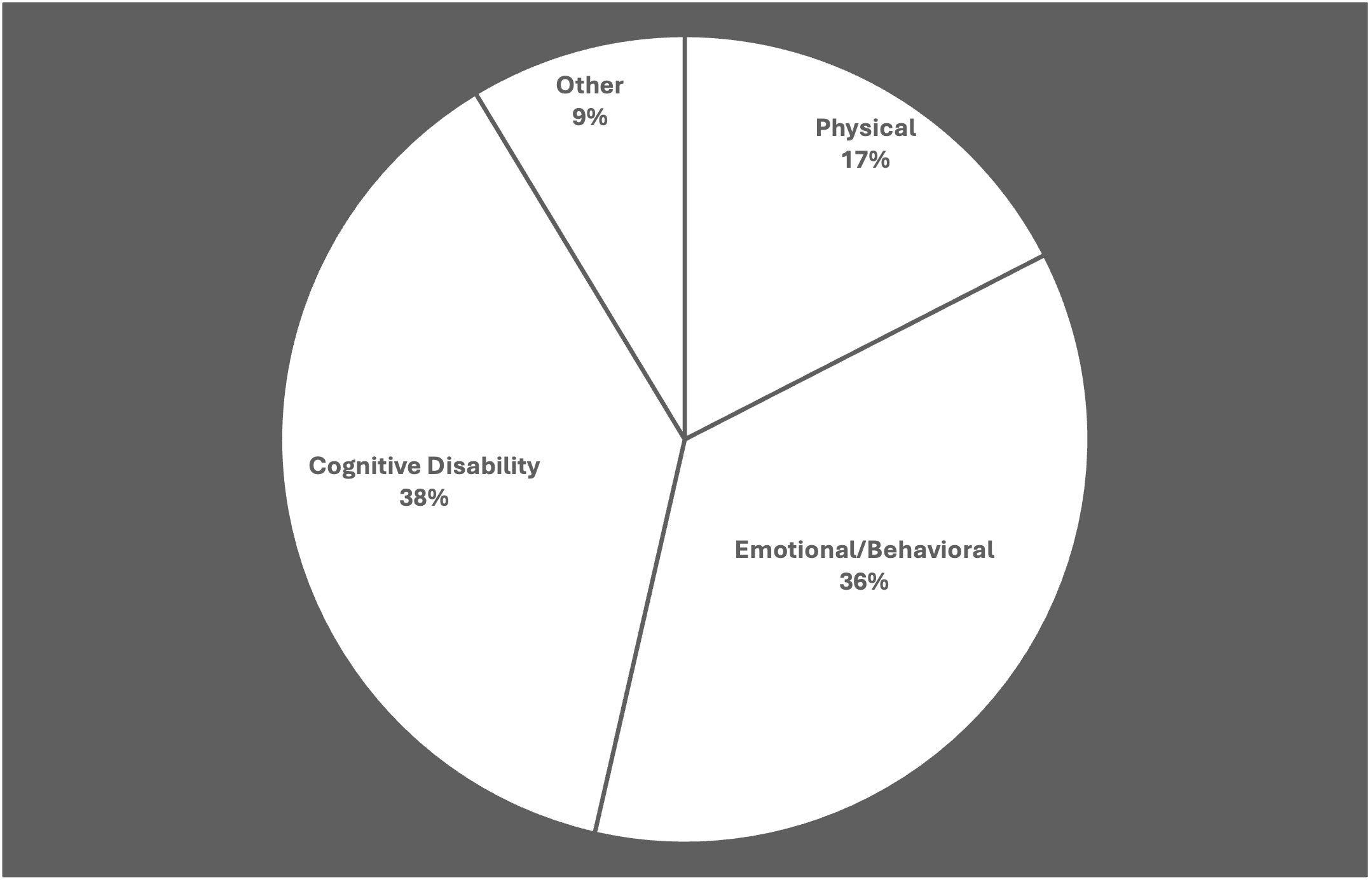
Figure 1. Pie chart of disability categories for worldwide responses. Created January 22, 2025 by Lauren Rouse.
[3.2] The largest response for the worldwide responses was ADD/ADHD, with 1,163 responses (figure 2). ADD/ADHD diagnoses have recently begun rising. This is due in part to social media awareness of the disorders but also in part due to COVID-19, which resulted in the loss of people's work and school structures and increased cognitive dysfunction (https://healthcare.utah.edu/healthfeed/2024/06/why-adult-adhd-rise). Changes in diagnostic criteria and awareness among women and marginalized populations have resulted in more diagnoses, according to Abdelnour et al. (2022). Decreased stigma and initiatives to recognize and understand disabilities like ADHD, anxiety, or depression allow for more public conversations about the disabilities, which can assist in increased diagnoses. ADD/ADHD responses were followed by anxiety (660) and depression responses (623), both of which have also seen a rise in diagnoses since the COVID-19 pandemic (Clemente-Suárez et al. 2021; Frankenthal et al. 2023; Fan et al. 2021).
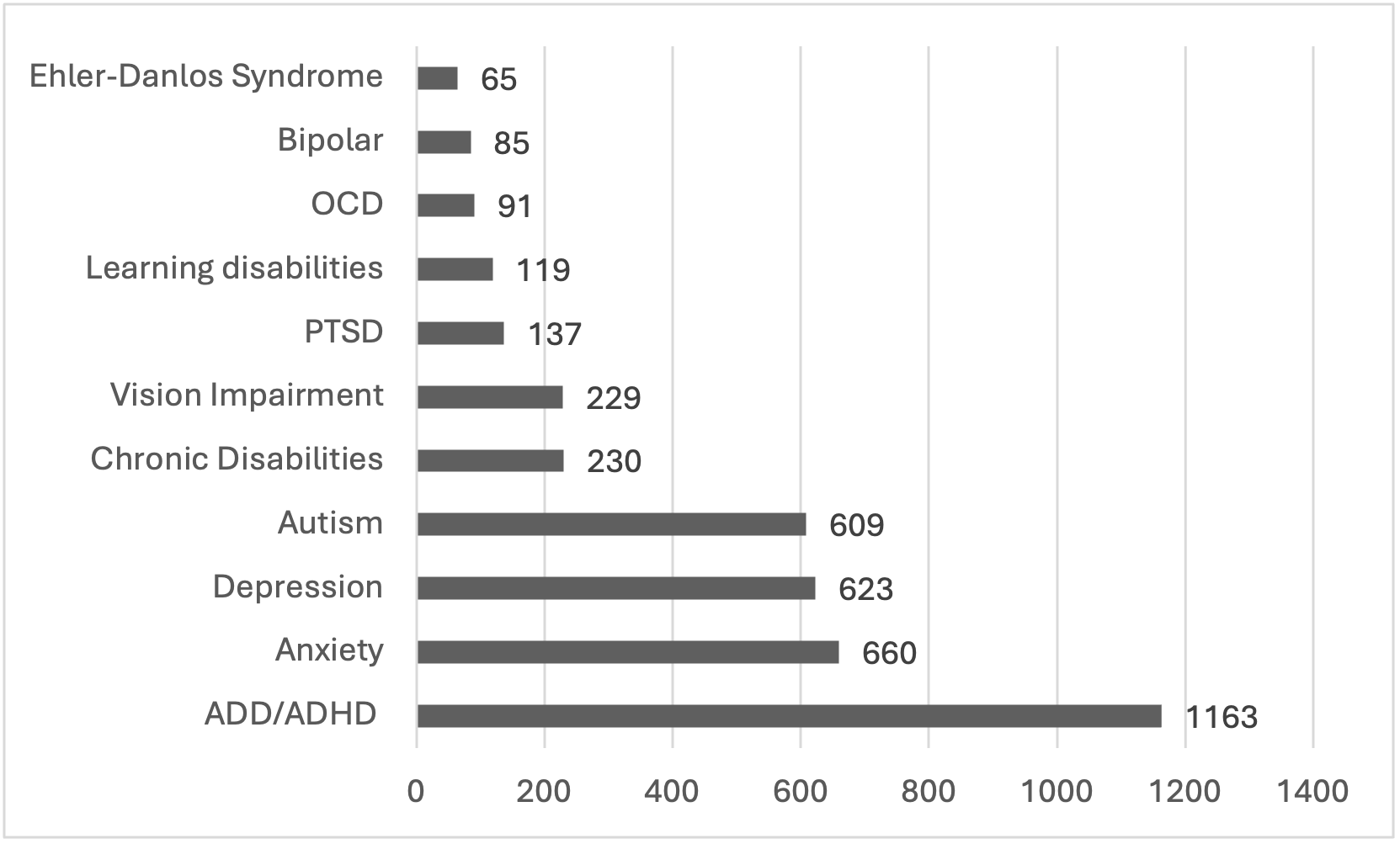
Figure 2. A bar graph of the top responses for disability in the survey. Created January 22, 2025 by Lauren Rouse.
[3.3] As fan studies scholars have long argued, fandom is a place for fans to think through important topics. Stanfill and I found that AO3 experienced increased web traffic during the pandemic, and fan works addressed issues of depression, loneliness, and anxiety; but fans largely ignored or failed to discuss "economic impacts, xenophobic hate crimes against Asian Americans, or […] sickness and death" in their works (Rouse and Stanfill 2021). Further, we concluded that fandom often prioritized white middle-class trauma in the fan fiction works tagged with "COVID-19" on AO3, despite those with marginalized identities being most affected by the pandemic overall. However, it is interesting to compare the focus on mental health in fan fiction works with the large number of fans who reported having emotional/behavioral disabilities. The prevalence of fans reporting emotional/behavioral disabilities appears to be reflected in the focus on mental health in fan fiction.
4. Localized results
[4.1] In the survey, there were 1,407 responses to the disability question for United States residents. US survey results were examined because of my positionality as a US-based researcher, as well as my familiarity with disabilities in the context of US healthcare, society, and media representations. I also chose to examine the US survey results more closely to clearly compare subpopulation data. Overall, the US data followed a similar pattern for disabilities to the worldwide responses: ADD/ADHD had the most responses with 712 (50.6 percent), followed by anxiety with 429 responses (30.5 percent), depression with 384 responses (27.3 percent), autism with 365 responses (25.9 percent), and chronic disabilities with 142 responses (10.1 percent) (figure 3). A study done by Osorio and Hyde noted that both anxiety and depression diagnoses in the US increased 63 percent between 2005 and 2017, which could be attributed to "the expansion of media multitasking and high levels of academic and economic stress" (2021). These stressors may have also led to an increase in ADD/ADHD diagnoses as well, likely compounded upon by the COVID-19 pandemic. Autism diagnoses have seen a similar rise (Harris 2023); Russell (2021) argues that this is due to the increased medicalization across the life course, while also noting that the rise may be partly accounted for by modern-day environment exposures across the life course. Surprising for this dataset was the number of responses for bipolar disorder. Overall, there were eighty-five responses for bipolar disorder in the worldwide data, with sixty-five of those coming from the US. An estimated 2.8 percent of US adults were diagnosed with bipolar disorder in the past year, compared to .53 percent of worldwide adults (https://www.nimh.nih.gov/health/statistics/bipolar-disorder; https://www.who.int/news-room/fact-sheets/detail/bipolar-disorder). In this survey, US bipolar responses are above the national amount (4.6 percent), and worldwide responses are overrepresented (3.4 percent). A survey done by Bauer et al. (2016) found that bipolar adults use the internet at the same rate to the general public, so we can infer that there may be some particular draw to AO3 and fandom for individuals with bipolar disorder. In a quick search, there are just over 7,000 fics tagged with bipolar disorder on AO3, and recent popular media like Queen Charlotte: A Bridgerton Story, Euphoria, and Shameless feature characters with bipolar disorder or symptoms of the disability.
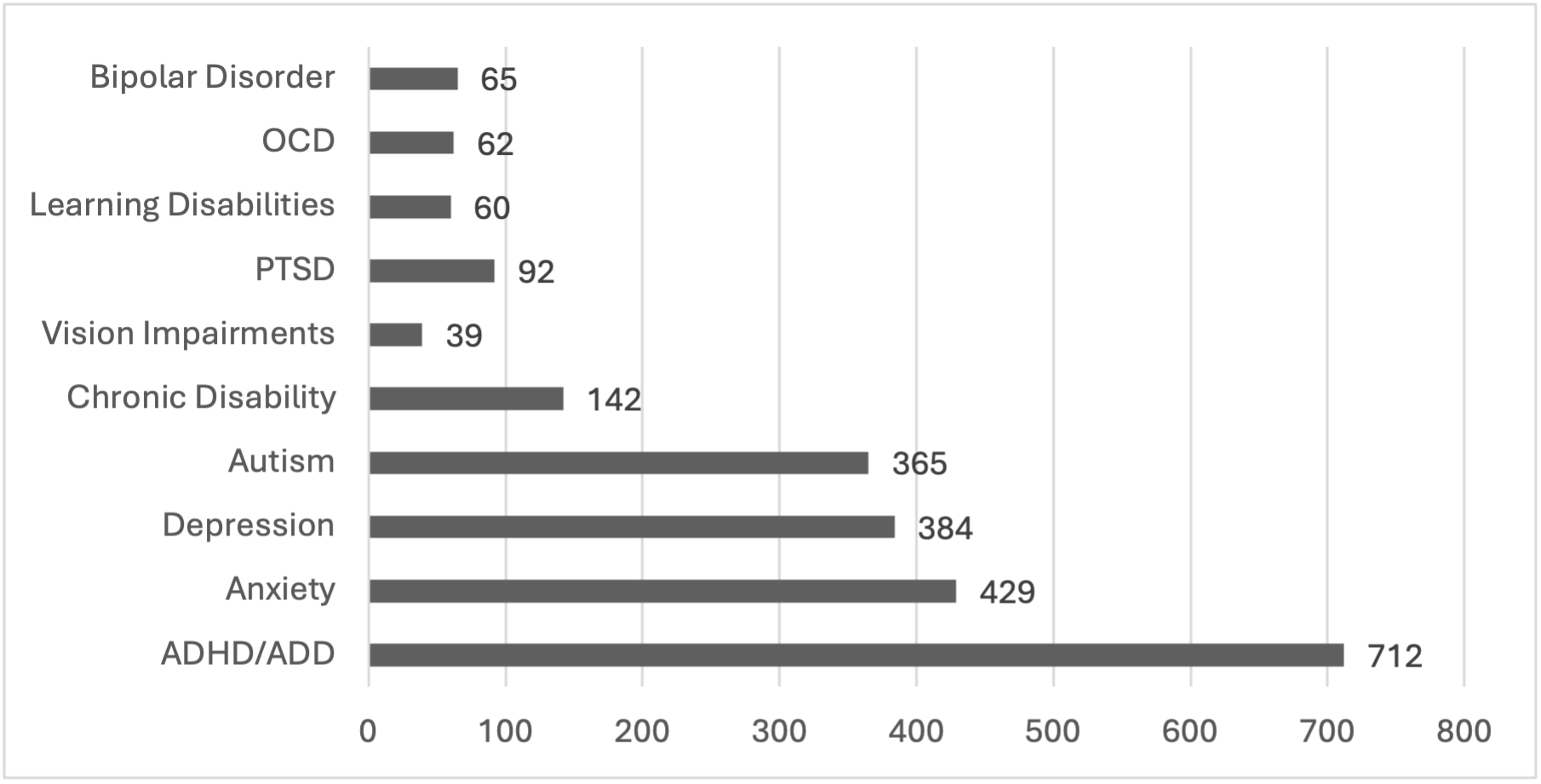
Figure 3. A graph of the top ten disability responses in the United States.
[4.2] As Stanfill and I have noted in other publications of this dataset, whiteness is overrepresented in both our responses and in fandom overall (Rouse and Stanfill 2021). For this survey, there were 1,143 responses from white US residents, 69 Asian responses, 40 Latino/a/e/x responses, 33 Black responses, and 4 Indigenous responses. There were also 124 "Multiple" responses—this label is used for responses of more than one race. The Centers for Disease Control and Prevention's 2022 Disability and Health Data System notes that the groups with the highest prevalence of disabilities (both 38.7 percent) identified as American Indian or Alaska Native (https://www.cdc.gov/dhds/about/index.html), who are underrepresented in this survey. ADDD/ADHD had the most responses in each race category and constituted the majority of participants, except from users who also selected Black/African American as their race (13). Anxiety, depression, and autism each followed as the next most popular responses, and all were similar percentages to the overarching US and worldwide responses. In examining each racial category, physical disability accounted for about 21 percent of the responses, which is above the worldwide responses of 17 percent.
[4.3] Because bipolar disorder was so frequent in the US dataset, I wanted to check it against racial categories. There were forty-four (3.9 percent) responses for bipolar disorder in the white race as compared to three (4.3 percent) Asian responses, four (10 percent) Latino/a/e/x responses, seven (5.8 percent) Multiple race responses, and two (6.1 percent) Black responses. Research has found that Black people, as compared to people with non-Black ancestry, were more likely to be misdiagnosed with a disease other than bipolar disorder (e.g., schizophrenia) (Akinhanmi et al. 2018; Li et al. 2023). Blackness and disability have a complicated and deeply intertwined history; because of this, many Black people are less likely to trust medical systems, be accurately diagnosed with disabilities, and be treated within any kind of medical industrial complex (Roberts 1999; Frederick and Shifrer 2019; Udonsi 2022; Morgan 2023). And, while Black people are underrepresented in this survey overall, it is important to acknowledge the intersections between Blackness and disability. As Alper discusses in her work, the intersections between race and disability are often not considered in autism or other disability studies. By providing this data, I hope to open further avenues between disability and race, particularly studies on neurodivergence and race, and highlight the importance of intersectional analysis.
[4.4] Overall, in the US-specific data of this survey, the data does echo the global perspective, with emotional/behavioral and cognitive disabilities constituting the majority of responses. White disabled folks seem to be overrepresented overall in this survey, while nonwhite respondents of all abilities are underrepresented. There are avenues for further research at these intersections. For example, there is an apparent embrace of mental illness as a narrative topic on AO3; however, white middle-class trauma is centered in many of these discussions, and a stigma exists against speaking about racial oppression or class issues on AO3. Further, because whiteness is seen as the norm, the expansion of disability identity online is focused on white fans, even as people of color face more disproportionate disabling forces in the physical world. Without further research, we cannot answer these valuable questions that interrogate the intersections between race and disability.
5. Conclusion
[5.1] There are many implications that can be drawn from this survey regarding the visibility and high population of disabled fans in these spaces. First, it affirms the research on disabled folks and internet usage, citing examples of fans using various platforms to engage with content they enjoy, despite their disabilities. However, it also reaffirms the issues that persist with physical access for those with physical disabilities, as this was a lower response rate than those with emotional or cognitive disabilities. Second, it shows a commitment to ability diversity within fandom spaces, something that I noticed in my early days of fandom and continue to see. This commitment to ability diversity has allowed me to develop and change my thoughts around my own disability and has helped me build a community of people with similar experiences. I know that I can discuss my mental health issues and my cognitive and emotional disabilities, and receive care in various forms without retribution or ableism—something that the real world still struggles with. However, in noting the ability diversity, it also highlights the lack of acceptance of racial and class diversity that plagues fandom spaces. As I noted, there are many pathways of research in exploring the intersections of disabled folks who also hold other marginalized identities, especially race or class, as there is also further research at these intersections beyond just this sample of AO3 users. Limiting the survey to AO3 users allows for ease of distribution; however, the research Stanfill and I have done on this survey notes that there are many more platforms that fans participate on and interact with. Qualitative research like interviews or ethnographies can certainly expand the arguments that I have made here and can provide additional perspectives on disability in fandom at large.
[5.2] Finally, this survey just looks at responses from readers and writers of fan fiction, which is a small portion of transformative fandom. There could possibly be a disconnect between the disabled population and inaccessible fan practices, which this study begins to imply; however, without further research, the accuracy of this hypothesis is currently unknown. By completing further quantitative research, fan scholars can begin to better understand this population and the ways that they contribute to and understand fandom and the media objects that they consume.
6. Acknowledgment
[6.1] A special thank you to Mel Stanfill, who completed this research and survey with me.