1. Introduction
[1.1] Robots have long served in popular culture as figures through which social difference is imagined and asserted. From early twentieth-century mechanical laborers to contemporary androids, images of humanoid machines stand in for real people who are othered for marginalized attributes or identities and subsequently characterized as lacking humanity, says cultural historian Dustin Abnet in The American Robot (2020). Within contemporary fan cultures, particularly on the nonprofit transformative fan works website Archive of Our Own (AO3), this legacy is actively contested and reworked. Fans engage robotic figures in a range of interpretive practices, including (1) rejecting the figure of the robot in attempts to extricate robotic-ness from portrayals of marginalized characters, (2) exploring cyborgian robot-human hybridity, in line with Donna J. Haraway's thinking in her (1991) 1998 essay "A Cyborg Manifesto," and (3) enacting critical reclamations of the robot archetype.
[1.2] Since 2013, users on AO3 have used the phrase "not a robot" as an idiom, largely in connection to characters from the Marvel Cinematic Universe (MCU). The original and most popular tag use of this idiom references the Marvel character Black Widow: "Natasha Romanov is not a robot." In AO3 works with this tag, authors attempt to correct socioemotional expressions such as exaggerated stoicism and coldness that they perceive as commonly misrepresented or misunderstood by filmmakers or fellow fans (Gille 2024). In doing so, they uncritically code an out-group associated with qualities like flat affect and social isolation as mechanistic. Some works tag a given character as "not a robot" and instead as autistic, having post-traumatic stress disorder (PTSD) or (more rarely) other forms of neurodivergence. These works use the "not a robot" idiom to try to differentiate between neurodivergence and mechanistic attributes. However, even this strategy attempts to include certain types of neurodivergence in a normative in-group, rather than critically rejecting the exclusive system of normativity.
[1.3] Some fan works explore themes of cyborg hybridity as another way to interact with the idea of mechanistic personhood. Beginning of Your Meaning (BoYM), by Sara_holmes, is one such work (note 1). About the MCU's Bucky Barnes (the Winter Soldier), the fic explores Bucky undergoing various therapeutic processes and confronting his converging and intersecting identities, including veteran and prisoner of war, amputee with mechanical prosthetics, bioengineered supersoldier, and victim of behaviorist conditioning. The last is a sci-fi trope signifying mechanistic mind control, which builds on the idea that psychology provides ways to reprogram a person's mind. All of these examine ways in which Bucky's body and mind differ from various norms in ways that often make him seem mechanistic, whether because parts of his body are metal or because he exhibits a flat affect. Bucky also navigates his sexual identity as queer, a common interpretation among fans that intersects with some of his other journeys. In BoYM, Bucky's friends introduce him to a recurring intertext, the song "I Am Not a Robot" by pop singer MARINA. They expect him to identify with it—in part because he, like the song, continually rejects opportunities to identify with the word robot. Over time, Bucky begins to construct a nuanced understanding of himself by accepting the label cyborg, emphasizing hybridity among his more and less mechanistic aspects. The cyborg label does not necessarily interrogate the full robot archetype or reclaim it, but it does hold ample potential for critically exploring crip (short for the slur cripple, reworked into a disability studies analytic framework that emphasizes reclamation) futures, as argued by theorist Alison Kafer (2013). Similar work of reclamation is being done by fan writers who reimagine and reclaim the noncyborg robot as a sentient being whose affect and attachment are as complex, unique, and potentially neuroqueer as those of any human character.
[1.4] I analyze such fan works on the AO3 platform, contextualize them in the history of mechanistic understandings of neurodivergence and queerness, and illustrate how fan works and the platform itself can be tools of resistance (note 2). I begin with an overview of the intertwined history of queer and neurodivergent medical and psychological pathology, throughout which scientists and taxonomists have used mechanistic allegories to describe, conceptualize, and construct neurological and sexual difference. That history provides important context to neuroqueer theory, a framework for thinking about neurodiversity in terms of reclaiming culturally constructed divisions between normative and divergent neurotypes. I then discuss my approach to bringing neuroqueer theory to fan studies. My primary source analysis incorporates close reading and discourse analysis methods. I establish the semiotics of the neuroqueer robot's body as portrayed in fan fiction. I next investigate narratives of relationships between robot characters and others. Lastly, I consider the AO3 platform itself through the lens of self-reflective and self-describing fan fiction. I find that fannish portrayals often radically explore mechanical characters as queer and neurodivergent in empathetic and stereotype-breaking ways. In so doing, they neither uphold a history of mechanistic portrayals of queerness and neurodivergence found in mainstream media, nor reject it in attempts to establish individual characters or marginalized identities as socially normative. Instead, they subvert stigmatized ways of being and connecting with others, putting into practice critical understandings of social identity.
2. Background: Pathologizing certain bodyminds as mechanistic
[2.1] To understand the roots of mechanistic portrayals of queerness and neurodivergence, it's helpful to look at the cultural history of clinical and mainstream pathologizing perspectives on such categories of difference. Constructs of atypical sexuality and neurodiversity have historically overlapped, as both are methods of understanding and regulating human diversity. They exemplify ways in which particular bodyminds—a disability studies term that signifies the connection between the mental and physical experience of the body, according to scholar Margaret Price (2015)—have been conceptualized as mechanistic or robotic. Many cliché tropes of the robot archetype commonly portrayed in popular media trace back to early pathologizations of asexuality, queer sexuality, gender-queerness, autism, and trauma-impacted neurodivergence.
[2.2] Since the eighteenth century, Western and especially American culture has often understood the human body under mechanistic terms, but some bodyminds have consistently been construed as especially cold—lacking, flat, empty, and ultimately inhuman. For instance, the contemporary pathologization of nonnormative sexuality can be traced to frigidity, a medical diagnosis first conceptualized in the nineteenth century that framed disinterest in normative sex as physical or neurological disability. Asexuality scholar Sherronda J. Brown (2022, 88–90) argues that "frigidity" functioned as a historic pathologization of asexual experience that enforced a standard level of sexual activity while upholding "cisheteropatriarchal" hegemony more generally. In the late nineteenth century, physician Félix Roubaud expanded the frigidity diagnosis to encompass nonnormative (read: queer and/or kinky) sexual desires, gender presentations, and physical sources of pleasure (external genital stimulation, for example, was considered nonnormative for females). Roubaud anticipated a broader trend that would take a few decades to spread to the United States in which all divergent gender- and sexuality-related behaviors began to be collectively medically pathologized. This conceptual inheritance of frigidity extended to autism. In the mid-twentieth century, psychologists like Leo Kanner and Bruno Bettleheim advanced the figure of the "refrigerator mother," which rhetorician Jordynn Jack (2014, 60) argues was a "synecdoche" for a diagnosed-autistic child's parenting and home environment. This figure pathologized 1950s middle-class mothers as lacking emotion and affect while also criticizing them for being overly educated, burdened with scientific parenting advice, and apt to overly focus on "quantification, expertise, and regulation" in their day-to-day parenting (Jack 2014, 44). In other words, the refrigerator mother was so robotic she could be blamed for her child's autism, while autism was defined as an unnatural product of a mechanistic environment. Rhetorician M. Remi Yergeau traces how autism has been continually and offensively defined as mechanistic in Authoring Autism (2018), challenging claims that autistic speech and thought are rote or nonexistent. Yergeau notes that some hegemonic discourse operates under the understanding that "autistic people who display metaphoric capacities only do so through rote or compensatory strategies"—such as "hacking" or "scripting," terms which shed light on the technological connotations that play a part in defining autism in terms of lack and difference (59). Historically, mechanistic conceptions of autism and other pathologized nonnormativities have been met with mechanistic treatments designed to train or code subjects to follow normative scripts.
[2.3] After World War I, heightened concern with disability was met with advances in medical and behavioral technologies. Behaviorist treatments in particular treated subjects' bodyminds as an opportunity to methodically program culturally preferred behavior. Today, mechanistic responses to difference have been criticized on the grounds that they originate from broader dehumanizing and frigidly mechanistic understandings of the subjects; for example, anthropologist of autism and technology Kathleen Richardson (2018) has critiqued the use of robots in children's autism therapy. Today's conditioning therapies have a goal of in-wiring a person's behaviors, treating them like a programmable machine rather than a being with a right to exist authentically (Yergeau 2018; Richardson 2018). This kind of therapy has deep roots: Roubaud advocated for normativizing treatments for queer-pathologized individuals that prefigured behaviorist conversion therapies (Brown 2022). A continent away and nearly a century later, American psychologist Ivar Lovaas developed applied behavior analysis (ABA) therapy to repress autistic behavior. He later mentored and collaborated with George Rekers, who applied ABA to suppress femininity in young autistic boys. As Yergeau (2018) and trans/crip studies scholar Cameron Awkward-Rich (2022) respectively document, Rekers and Lovaas conducted an infamously violent heteronormative, cisnormative, and neuronormative 1974 conversion study whose legacy includes the suicide of its primary subject, Kirk Murphy, and the subsequent anticonversion therapy movement that was led by Murphy's family, who had been active participants and advocates of ABA for feminine boys until his death decades after the study. Although scientific consensus has since rejected antiqueer conversion therapy, ABA remains widely used on autistic patients and continues to impose strict gender norms on subjects, revealing that it has not shed its antiqueer origins (Yergeau 2018). As Yergeau (2018) argues, the aim of such therapies is not biomedical cure, but the conditioning of conformity—regardless an attempt to erase nonnormativity and deny an inclusive future. Taken together, these histories reveal how queerness and neurodivergence became intertwined through narratives of mechanistic deficiency and correction.
[2.4] The nonnormative robot has long appeared in popular culture as a figure through which neuro-, gender, and sexual difference can be articulated. Autism studies scholar Erin Felepchuk (2021, 55) argues that characters implied to be autistic are frequently marked through mechanistic sound design and repetitive language, which "portray autistic thought processes as mechanical and automated." Felepchuk cites The Big Bang Theory protagonist Sheldon Cooper, whom asexuality scholars Ela Przybylo and Danielle Cooper (2014) cite as a potential read for asexual resonance as well as autism. While Sheldon is not textually identified as either asexual or autistic, fans describe him as coded as such—a term explained by fan studies scholar Christa Mullis (2019) as follows: "An 'autistic-coded' character is not merely a character they would like to be autistic, or that they see a few sprinklings of autistic traits in, but one who is so obviously autistic, they must actually be autistic." In other words, the claim of coding does not assert authorial intent toward representation; rather, it names strong textual resonances recognizable to audiences. These resonances draw on established cultural narratives, including my focus on mechanistic and robotic metaphors. In speculative fiction, the robot has represented subjects with nonnormative bodyminds that can be "conditioned" via behaviorist therapy to pass as "perfect" men or women since the 1930s, according to cultural historian Dustin Abnet (2020, 164–76). Robots wishing to be human became a cliché of the genre, argues autism studies scholar Rachel Anderson (2024), who identified the presence of the trope in Isaac Asimov's I, Robot (1950), Philip K. Dick's Do Androids Dream of Electric Sheep? (1968), and Star Trek: The Next Generation (1987–94). Anderson claims Martha Wells's Murderbot Diaries (2017–23) pointedly rejects this tradition: Rather than aspiring to human norms, Murderbot embraces its mechanistic difference and resists narratives that frame divergence as deficiency—which is a significant enough change that autistic fans differentiated between harmful representations of "autistic-coded robots," which uphold "the 'machine' stereotype," from Murderbot's story about mechanistic nonnormativity, which a variety of audiences have the opportunity to resonate with (169–70). The robot functions as a site for identities tied to historically pathologized categories, precisely because it has been used to represent them.
[2.5] Radical acceptance is a subversive way to cope with dehumanizing rhetoric, finding something likable within nonnormativity. Asexual folks, for example, sometimes self-identify as robotic, or relate to robot characters, while simultaneously resisting being compared to a robot in a derogatory context (Brandley and Dehnert 2024). Autistic fans celebrate the Murderbot, who does not want to be human, but even speculative fiction like Blade Runner (1982; adapted from the works of Philip K. Dick) with portrayals of robots that otherize autism may simultaneously offer opportunities for cultural engagement, says media scholar David Hartley (2022). In AO3 fandom, mechanistic depictions of neurodivergence and queerness tend to reclaim such harmful mainstream depictions of frigidity, particularly autistic, asexual, and gender nonconforming identities by embracing, rather than othering, the neuroqueer robot.
3. Bringing neuroqueer theory to fan studies
[3.1] I draw on scholarship at the intersections of fan, queer, and disability studies to understand how fans critically reclaim cis-, hetero-, and neuronormative narratives of mechanistic disability and robotic queerness. Neuroqueer theory offers a productive framework for scrutinizing politics of disidentification in products of fannish labor. Here, I outline my approach to the project and the scholarly literature that informs my argument. While existing scholarship has examined various intersections among robots, neurodivergence, queerness, and fandom, I contribute a distinct intervention by analyzing the specific ways robot fandom functions as a site for practicing neuroqueering to say something as yet unsaid in each of these conversations.
[3.2] I began by reading works about robots, looking for ways the archetype was reworked to comment on the intersections of queerness and disability. Because enforcing neuronormativity is so often about enforcing gender and sexual roles, my neuroqueer approach incorporates a focus on intersections among neurodivergence, genderqueerness, and asexuality. Early in the research process, I surveyed a wide range of fan works on AO3 featuring robots, which I defined as artificial intelligences with mechanically constructed bodies. I compiled an archive with dozens of works from a variety of fandoms that had shared tags or themes. I found that in fan fiction about canon robot characters, like Data from Star Trek, it was often difficult to disentangle fan additions from canon details, even when the fandom was one I was familiar with. I narrowed my focus to works in which characters were interpreted as robots for the first time. This yielded a varied set, many of which were tagged as "Alternate Universe (AU)," most commonly "AU: Robots and Androids," indicating a major shift from the canon setting. I identified two primary categories: works that reimagined established characters from a given intellectual property as robots and those classified as original works. The latter typically placed original characters in broadly recognizable settings, relying on readers' genre literacy to fill in worldbuilding gaps. In those cases, creators engaged in fandom not of a specific piece of intellectual property, but of the robot as an archetype.
[3.3] In searching for scholarship on these intersections, I found sociologist Justine Egner's 2019 article about the blog that developed the term neuroqueer. Egner's argument that neuroqueering operates through disidentification—drawing on José Esteban Muñoz's theory of queer drag performance—was particularly generative. Neuroqueer emerged as a framework centered on reclaiming harmful markers of difference—precisely what the robot fics were doing. I later encountered Jessica Sage (who has since published as Jess) Rauchberg's (2022) work on popularizing neuroqueer approaches to technoscience, which prompted me to consider how AO3 itself reflects the same fan ethos that enables neuroqueering practices. Perry Zurn's (2024) "Re-Citing the Origins of Neuroqueer" further informed this framework by tracing the phrase's development to neuroqueer-identifying bloggers, as well as more frequently cited scholars such as Nick Walker, Yergeau, and Athena Michaels-Dillon. Additional influential neuroqueer readings include Yergeau and Julia Miele Rodas's respective 2018 books on the rhetoric and poetics of autism, both of which incorporate neuroqueer thinking. I draw heavily on Yergeau's thorough interrogation of antiautistic rhetoric. Rodas's work establishes a model for identifying autistic storytelling, later applied to screen analysis with Hartley's (2022) analysis of neuroqueer poetics in Blade Runner, a film not coincidentally about cyborgs. Hartley argues that the film employs neuroqueer storytelling and that its cyborgs help construct neuroqueer worlds with autistic possibilities through their mechanistic bodyminds.
[3.4] Several recent works establish fan production as a site for critical queer and disability studies, especially productions from the sci-fi genre and other fandoms that imagine alternative realities. For example, in 2019 Rebecca Black and collaborators observed that Harry Potter fans viewed the canonical fantasy setting as conducive to autistic representation; in 2023, Ben Cromwell identified the same setting as a space inclusive of disabled and trans characters in deliberate opposition to the creator. In both cases, fandom emerges as a site of critical reception and radical inclusivity. Martine Mussies's recent 2025 work with cyborg mermaid fan art similarly demonstrates how fan products exemplify disidentificatory politics, focusing on intersectional resonances of the subjects' hybrid identities. These studies collectively position fandom as a space where marginalized audiences critically rework texts. Building on this body of scholarship, I employ discourse analysis to examine how fan creators work with semiotic and narrative conventions that extend beyond any single fandom and how they imagine the archival structure of AO3 to support the creation and visibility of these neuroqueering practices.
4. Androids with synthetic skin serve neuroqueer bodymind realness
[4.1] In works about robots, fan creators understand skin as a significant symbol. Media studies scholar Despina Kakoudaki (2014, 69) claims that in robot literature, skin is a site where speculative fiction authors try to solve "what the discourse depicts as body problems," particularly when it comes to appearance and vulnerability. While skin can be a defining trait of otherness, especially for race and racial allegory, it can also function as a technology of passing as somehow normative. According to historian of visual culture Jennifer González (1995), speculative fiction has long used robot and cyborg technology as an opportunity to evade social issues through the erasure of diverse identities, especially via a synthetic mask that serves a normative disguise. This image resonates in the neuroqueer space, where Yergeau (2018, 123, 132, 56) defines "masking" as a type of "closeting," while autism is "skinless"—vulnerable, obvious, and without a boundary between self and environment. On AO3, fan works rework and reclaim the image of robot skin as a synthetic mask, ultimately functioning like see-through or removable drag that draws attention to a character's neuroqueerly disidentifying performance of identity.
[4.2] Fan works use the robot image to reimagine race in fantasy fiction. One fan work, hosted on Tumblr but featured on AO3, visually showcases the semiotics of skin. Fan artist Shipsicle's (2018) piece depicts Bilbo Baggins and Thorin Oakenshield from J. R. R. Tolkien's The Hobbit (1937) (figure 1). Diverging from canon, Bilbo is depicted as a small humanoid robot or android. He has pointy ears, a protruding cylindrical nose, and gold clothes, hair, and skin. Bilbo looks toward Thorin, who has Black skin, short black hair, and a dark jacket with a silver patch which reads ACORN, the name of his professional organization and a reference to the 2014 film adaptation of The Hobbit. While skin color is rarely mentioned in Tolkien's literary works, the art certainly appears to be a racebending of Thorin as portrayed by Richard Armitage. Racebending has been defined by Abigail De Kosnik and andré carrington (2019, ¶ 5.3) as a practice in which fans critically engage with a source text "by creating a revision that centers the perspectives and experiences of people of color." Bilbo's gold skin similarly revises the portrayal by Martin Freeman, but it nods toward the artificial with both color and form. His skin is marked with lines indicating the joining of mechanical plates on the surface of his body. In Shipsicle's (2018) caption, Bilbo is placed within a robot AU as someone who is typified by his physique: "Robots and cyborgs have had their equal rights for a decade (though there will always be bigots) and live their own lives as peacefully as any other person." The author goes on to suggest a romance between the two characters. Using an allegory of robots allows creators to explore a civil rights movement alongside already normalized interracial and same-sex romance.
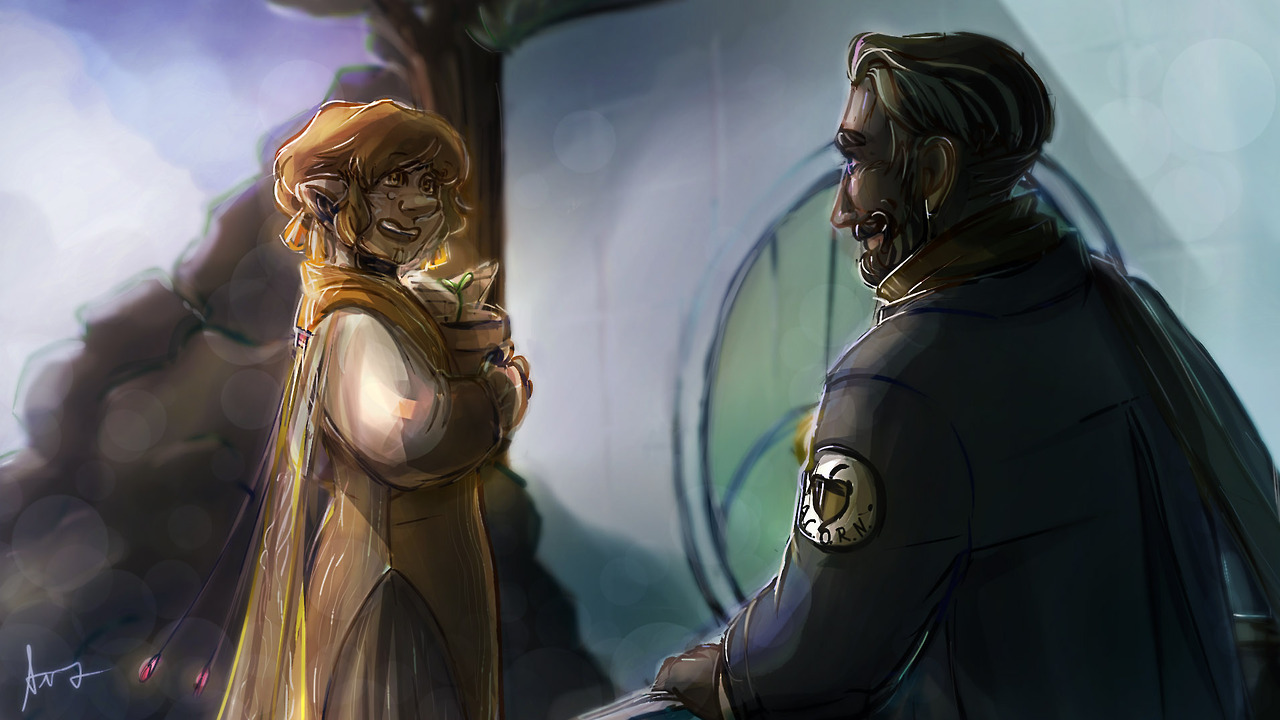
Figure 1. Bilbo meets Thorin (Shipsicle 2018).
[4.3] The allegory imagined in Shipsicle's (2018) art was further explored in between synapses and circuits, a fan fiction by MistakenMagic (2018). Also set several decades after a robot civil rights movement, the story imagines Bilbo as a HOBBITv.2890, a small and effectively immortal android. Thorin—Bilbo's love interest—is a human mechatronic engineer who meets Bilbo in a medical context. A veteran of the android rights movement, Bilbo's yearning to be treated as a person at times contributes to self-neglect, exemplified by the incident that sets the story into motion: Bilbo is injured and waits long enough to find medical help that the engineer requests a follow-up meeting out of concern for Bilbo's mental health (MistakenMagic 2018). Although easily punctured, Bilbo's synthetic casing can be healed perfectly thanks to invisible cybernetic stitching. Unlike Thorin, he does not have physical scars from his involvement in "the protests, before the government brought out the legislation for inter-sentience marriage." But Bilbo's skin remains visually vulnerable: There are several places, including his face, with open grooves "where the pale plates of synthetic skin fit together," which are susceptible to natural elements and mark Bilbo's physical disability. His vulnerability is both flagged by and related to his construction, as Bilbo is depressed, anxious, and destructively hesitant to connect with people who care for him. This echoes Tolkien's original exploration of trauma but is now contextualized with the specific backstory of fighting for the right to personhood and intergroup relationships. Importantly, Bilbo retains that vulnerability and difference. He never gains the ability to pass as human; nobody ever suggests any solution other than disability aids in the form of outerwear, and the romantic pairing remains aware of their differing lifespans. As Cromwell (2023) notes, fiction can provide perfect disability cures or transition, but fan authors often choose not to include that. Like the fantasy fan writers Cromwell discusses, creators Shipsicle and MistakenMagic imagine mechanisms that facilitate diversity by providing support without elimination.
[4.4] Silicone by Mamabuns (2023), an original work hosted on AO3, also refuses to enact cure narratives, now in a context of transness. This work takes place entirely in a home workshop, set against a broader world the audience knows only minimally: a high-tech society where androids are built and owned by corporations. Protagonist Ella—tagged "trans allegory," "autism allegory," and "android femme"—cannot pass as a human; she is seven feet tall, has vulnerable ventilation spots with "exposed mechanics," and is outfitted with a "silicone-adjacent outer casing…it approximate[s] a muscular human woman's body, the skin a light periwinkle (Ella's preferred gender expression and favorite color)" (Mamabuns 2023). Ella's trans allegory avoids the common trap of falling in line with bodily models of transness (Awkward-Rich 2022). In Mamabuns's story, Ella is tagged as "femme"—never female, woman, or gynoid—exemplifying the significance of the solely social and aesthetic queer gender performance she aligns with. Ella's casing exemplifies the way her body functions primarily as self-expression. While Bilbo's skin was pale in MistakenMagic's fic and golden in Shipsicle's art, Ella's purple skin dramatically deviates from human colorings, refusing to approximate normativity. Her exposed mechanics parallel Bilbo's in meaning; they are an incomplete barrier. When Ella's casing is removed for repairs, Ella feels "about as close to 'naked' as an android could" (Mamabuns 2023), implying the casing is akin to clothing and her skin, therefore, is a protective form of gender expression.
[4.5] The fan fiction case studies I have analyzed so far develop an understanding of android skin as a racialized and neuroqueer drag, where instead of hiding one nature behind another, they engage in performance art that reflects a layered truth. Autistic bloggers have described ABA-enforced masking as "a neurotypical inversion of drag" in that subjects are guided to perform a normative gender as part of the mission to pass as neurotypical (Yergeau 2018, 29, 123). If drag inverted is a false performance of conformity, then typical drag must be a real performance of nonconformity. Queer theorist Xavia Andromeda Publius applies "realness," a term originating from Black and Latin underground drag ball culture, to the uncanny trans cyborg (2023, ¶ 3.11–12). She suggests a "meatsuit realness," which gives an "illusion that there is an unmediated body" (¶ 3.11) while consistently drawing attention to the technological apparatus supporting it. The constant acknowledgment of the technology is, she argues, the difference between subversive drag and the survival technique of passing. The fan fiction androids I've discussed seem to demonstrate neuroqueer meatsuit realness. They are neither masking nor passing; unlike closeted neuroqueers, and unlike cyborgs hiding their technological hybridity, Bilbo and Ella do not pass as organic humans. Their heights drastically differ from the normative human range, both with trans implications. The gaps in their casings are visible, nonnormative vulnerabilities. The color and material of their skin signify their difference and draw attention to their holistic (non)separation from the outside world. Their queered, cripped, and racialized resonances intertwine through their visual nonconformities, subverting expectations of conformity by refusing to ever fully mask their insides. The anthropomorphic android is continually involved in the act of passing, presenting a nonhuman bodymind as a human one, with synthetic skin serving as a synecdoche. Androids subvert intersectional passing through drag realness, exemplifying an intrinsically Black, Indigenous, and Latin aspect of neuroqueer activism. Evoking neuroqueer bodyminds, fan fiction robots raise questions about distinctions between self and other.
5. Robot/human relationships reclaim medical hierarchy through neuroqueer kink
[5.1] Historically, the relationship between robot and human has been defined by hierarchy. In a medical and intimate labor context, this has generally been defined in terms of humans as the default oppressing class and robots as subservient caretakers (Abnet 2020). But in the real world, inside institutions and within the ABA model, mechanistically dehumanized neurodivergent patients find themselves surrounded, mistreated, and potentially abused by medical authority figures (Kafer 2013; Yergeau 2018). On AO3, "Robot/Human Relationships"—the most popular tag containing the word robot—often reworks medical hierarchies through neuroqueer kink roleplay, which especially resonates with asexual, autistic, and trans interests. While robot literature, including fan fiction, often includes more obvious manifestations of asexuality in robot fan fiction, like explorations of platonic friendship, many works use robots to explore erotic narratives with asexual resonance. As Thom Winter-Gray and Nikki Hayfield (2021) argue, some kinky asexuals separate the imaginary—including fictional interests like robots—from the real, which helps contextualize the phenomenon. Through fantasies of bondage, discipline, dominance, submission, sadism, and masochism (BDSM), these stories depict creative forms of intimate play that carry neuroqueer, cross-sectional appeal.
[5.2] Many robot fics explore themes of engineer–robot relationships through a medical care dynamic in which the human services the robot. In Silicone, Ella's love interest Iris is an engineer tagged as an "epic haxx0r [hacker] perfectionist femme" who freed, deprogrammed, housed, and befriended Ella (Mamabuns 2023). Part of a cyberpunk "jailbreaker subculture," Iris found Ella as a "discarded…multipurpose tool" that she then "fixed up" with hacks and mods, including the gender-affirming synthetic skin. Iris enacts technological hacking as a radical act of care labor. As Rauchberg (2022) argues, technoscientific hacking can be a tool of neuroqueer activism when it centers the needs of disabled people and disrupts ableist hierarchies. Iris's "jailbreaking" becomes a rhetorical challenge to hegemonic institutions, aligning her deprogramming efforts with crip, trans, class, and racial justice. But that's just the context; Silicone's story begins when Ella experiences new glitches—coincidentally all symptoms of having a crush—and Iris offers to perform a checkup (Mamabuns 2023). Iris is Ella's friend first, but her caretaking medical role positions her to initiate Ella into an intimate dynamic that resonates with kinky autistic disidentification. The author emphasizes the consensual nature of their interactions, from Ella's employment in Iris's shop to their verbal clarifications at the beginning of their intimate encounter, which resonates with Amy Pearson and Sophie Hodgetts's (2024) findings that autistic kink practitioners take comfort in clearly communicated consent.
[5.3] In many of the more than 2,700 fics tagged "robot/human relationship(s)" and rated Explicit, kink provides a framework for neuroqueer subversion. Take, for example, the 2023 gifted work by G. D. Bongle (gdbongle), Flying Sparks, tagged "Robot kink" and "BDSM scene." Like many original works tagged "AU: Robots and Androids," the audience knows little about the setting aside from the general premise that a robot revolution has occurred and thus the genderless robot protagonist is considered a nonhuman person. Said protagonist, Spark, seeks disassembly, hacking, and being "broken" (Bongle 2023). Spark cedes control to Tori, a mechatronic engineer, to explore fantasies aligning with "wire play." This tag indicates a popular act within robot erotica (including about canonical robots) denoting a mechanical character submitting to physical and digital attacks and is often explored as an asexual yet erotic act. Pleasure—or otherwise compelling sensory experience—beyond sex is a factor in both autistic and asexual interest in kink (Pearson and Hodgetts 2024; Winter-Gray and Hayfield 2021). Wire play often goes hand-in-hand with a deemphasis on genitalia. Spark's mechanistic interests, for example, allow neuroqueer play to be erotic without necessitating the narrative conform to allonormative expectations. Spark overtly acknowledges that Tori's penis is "not arousing," but neither of them expect it to be. Their activities ultimately mean Spark "crashes" and eventually reawakens thanks to Tori's aftercare. While not framed as an orgasm, it does meet what crip studies scholar David Serlin (2023, 138) calls "the heights of subjective sexual pleasure," part of an "unrecognizable" yet valid crip erotic practice. Spark shares a number of qualities with Ella, the periwinkle transfemme- and autistic-allegorized android from Silicone. Ella finds herself diverging from expectations in the intimate scene in Silicone when Iris focuses attention between Ella's legs, "but the pleasure Ella felt from Iris was equally exhilarating all across her body" (Mamabuns 2023). Spark can only feel sensation through specific sensors, but they are not placed in standard human erogenous zones. These fan works not only imagine potentially harmful medical care as erotic: They find an alternative form of erotic expression.
[5.4] The appeal of the neuroqueer erotica I've described here speaks to autistic, asexual, crip, and trans interests. This robot erotica tends to decentralize genitalia and often has a core fantasy of being seen and understood, inside and out, and exploring that through intimate play with one or more trusted partners. Rather than purely a creator or controller, the engineer becomes a robot doctor who can treat the robot's pain, sensory overload, and stress, but is also willing to push them to explore their limits in these areas. Fic might still fantasize about dominance, submission, and power, but it integrates these themes into a deeply caring ethos that resists hierarchy. In these stories, fans explore what it means for robots to participate in care labor as autonomous, relational beings. Robot/human relationships are used to propose asexual, trans, kink, and crip models of care that resist normativity and affirm difference as central to connection. Ultimately, fandom itself becomes a site where power is not just reversed, but rewritten.
6. Archive of Our Own is represented as a neuroqueer platform
[6.1] Works on AO3 shed light on perceived neuroqueer formations of the archive and its community. The case studies I have presented so far have demonstrated that the archive is home to works about robot characters that thoughtfully engage with semiotic representation and erotic narratives, making moves to reclaim an archetype that has been used for harm. However, these fics also demonstrate the collaborative ethos of fandom: MistakenMagic's The Hobbit AU was inspired by Shipsicle's art and inspired more art in turn; Mamabuns's Silicone was written at a friend's request; and G. D. Bongle's Flying Sparks is a gift fic—meaning it is dedicated to another user on the website. Many works read earlier in my research process but not selected as case studies likewise credit beta readers, translators, or podficcers, underscoring the collective labor behind fan production. Now, I close-read a fic that reflects on fandom community and seems to argue that digital platforms such as AO3 contribute to neuroqueer possibilities of fandom.
[6.2] This fic, Izzy Gets Reverse Big Banged (IGRBB), published in 2024 by Vera_Dragonmuse (Vee), is not strictly a robot AU. Instead, it is a fandom AU in which characters from HBO's Our Flag Means Death (OFMD; 2022–23)—a show about eighteenth-century pirates stylized as a workplace sitcom—are reimagined in the modern world as sci-fi fans. The imaginary television show the characters build a fandom around, Voyages Unknown, satirizes OFMD, while the fandom world is a celebration of OFMD's fandom. What readers see of Voyages Unknown is primarily the impression of the type of show—the generic clichés, the minimal representation of same-sex sexuality, and a base concept that the characters are on a spaceship but have forgotten their mission in a bout of collective amnesia. The real story Vee tells is about that show's fandom, whose world spans from the virtual to the physical, from private servers, social media posts, and snippets of fan fiction to conventions and house parties. A close look at this fic helps construct an overview of how themes of vulnerability and connection carry critical neuroqueer significance, not only in the fan works hosted on AO3, but in the fan community's self-image.
[6.3] The sci-fi elements in IGRBB interrogate the robot archetype through the representation of a cyborg character and its fannish reception, with a resurgence of symbolic skin. Voyages Unknown's Eeily, a "cynical and embittered medic, who had half his body replaced with cheap cybernetics that sparked and made him flail when he was annoyed," is portrayed as a shallow character, depicted on television as nonnormative in a way that reinforces status quos. For example, Vee reproduces fan discourse (formatted like a Tumblr post) around whether Eeily is supposed to be an unsympathetic "self-hating homophobe villain," "autistic-coded," or just trying to enforce rules on a stressful situation to make it make sense. In other words, he is a character whose neuroqueer resonance affects his popularity. Eeily is also seen to protest commands with the refrain "Not a Robot," in a nod to Star Trek's Leonard "Bones" McCoy's "I'm a doctor, not a…," as well as The Good Place's (2016–20) Janet and the popular song by MARINA. However, he never challenges or names the hierarchy that this refrain suggests he's resistant to. He instead reproduces the very mass media mechanistic caregiver trope that is often subverted in fan works about robot/human relationships. This stands in stark contrast to Vee's representation of fan community. Protagonist Izzy Hands, imagined as a modern amputee and Voyages Unknown fan, cosplays as Eeily using traditional makeup and costume elements, his own prosthetic limb, and prosthetic skin and scarring (Vera_dragonmuse 2024). As discussed above, synthetic android skin in fic functions as an opportunity for neuroqueer drag that subverts a human-nonhuman binary and allows difference and vulnerability to remain visible. Izzy's cyborg cosplay similarly embraces the robotic aspects of the character, clarifying that the stance of IGRBB differs from the stance of Voyages Unknown. Vee also reflects on creative neuroqueering as fannish practice, with Izzy's skin functioning as the site of this work—the character's choice to cosplay is a reclamation of an aspect of fandom he had internalized discomfort with as something childish or nonnormative.
[6.4] When read as a commentary on fandom itself, IGRBB draws attention to the digital interfaces on which fandom takes place, including social media, community Discord servers, and AO3's front end. Interestingly, AO3 itself wears a synthetic skin—that's even the name of the feature. The site skin feature allows users to redesign the visual formatting of the website or select from a wide variety of preexisting options (Fiesler et al. 2016). While authors may apply a work-specific skin, readers can deactivate it. Authors are encouraged to meet accessibility standards so works with skins are comprehensible to people using screen readers or implementing common color and font size adjustments. This adaptable interface is a direct result of inclusive community-led development, which exemplifies a fannish ethos and fulfills the primary requirement of Rauchberg's (2022) neuroqueer technoscience: early and ongoing user input in design. Like the fan works that it hosts, AO3 uses the semiotics of synthetic skin to enable collaborative reworking.
[6.5] Collaboration is a defining feature of fannish practice, reflected in and exemplified by fan works on AO3 as well as the site's platform design. IGRBB's plot centers around a reverse big bang (RBB) event, a large-scale cocreation challenge in which fic is written in response to fan art, reversing the traditional big bang model. Writer Izzy is paired with artist Lucius Spriggs, and their creative partnership develops into a friendship and, later, a nonmonogamous relationship. Izzy experiences this cocreation process as transformative, both for himself and the wider community, which grows and strengthens through shared labor. Gift exchange is especially significant, framed as a therapeutic act of mutual care. This appears through the realization of the central premise. For example, their final RBB product lists both Izzy and Lucius as creators, and the top notes feature a dedication from Izzy to Lucius's screen name which reads, "This one is for Sketchemall, who not only did several amazing art pieces for it that are embedded throughout, but helped me shape the story from beginning to end." It's important to understand that AO3 supports gift culture through dedicated site functions, including the gift function, which allows a work to be linked to a dedicant and displayed on the dedicant's profile page, providing an opportunity to acknowledge that it takes a village to create fan work. But when Izzy chooses to invite Lucius as a cocreator, he honors him even further and implicitly trusts him with the option to edit or delete the work. The characters also express appreciation through conventional gifts: Lucius designs T-shirts depicting the sci-fi characters as dolls alongside the slogan "Playing with dolls is good for you," supporting Izzy as he reconsiders his internalized belief that fandom play is a childish misuse of time and effort. Vee's self-reflective fic demonstrates labors of care that, like those valued in robot/human fic, defy hierarchical norms of ownership. When IGRBB's narrative of mutual care is expressed through the context and language of AO3 fandom, Vee foregrounds communal creation in deliberate contrast to the corporate model of media distribution.
7. Conclusion
[7.1] Historically, mechanistic pathologization of nonnormative bodyminds has been rooted in dehumanization. In fandom spaces like AO3, the robot archetype is used to neuroqueerly challenge dehumanization by affirming that nonhumanity is worthy of acceptance, love, care, and inclusion. The very existence of the works I analyzed suggests that fans perceive AO3 fandom as a neuroqueer safe haven. Both their queer and occasionally sexual or kinky nature would make them vulnerable to censorship on monetized or algorithm-driven platforms, where niche stories are easily buried or erased (Fiesler et al. 2016). AO3's noncommercial model means the archive doesn't try to control what its users write or read. Because fics are products of care, community values are reflected in the stories themselves. It is no coincidence that fan creators, including those who write original works, give their stories away for free while centering narratives around the importance and beauty of intimate care labor. Creative fan works exemplify neuroqueer modes of production, resisting marketability as a metric of value and refusing to self-censor in the name of acceptability.
[7.2] We need to protect and support our neuroqueer(ing) communities. This task requires participation. It includes donating time, effort, and resources to one another and our organizations and advocating against censorship laws when necessary. These works demonstrate that, above all else, it is imperative that we support unconventional self-expression, challenge hierarchies, care for and play with one another, and honor one another's crafts. These are the values that built this space, and they are what will sustain it.