1. Introduction
[1.1] The experiences and expressions of fandom are guided by the digital infrastructures that underpin them. Like all media, fan works have been shaped by the technologies that have been available for their production and distribution. Consequently, we need to pay special attention to how various outlets and platforms channel fannish practices, creations, and communities. We investigate how TikTok's preferences for fast trends, short-form video, and algorithmic curation shape game fandom. As a highly popular mobile-native application, TikTok has become not only a homebase to many fandoms but also a leading platform to direct both cultural and technological trends. One example of these trends is how TikTok has been central to the proliferation of the format of short-form video, now also copied to services like YouTube shorts and Instagram reels. Another example is how TikTok has centralized memetic communication through trending sounds, actions, and events (Zhao and Abidin 2023). Jumping off this shift toward audiovisual memetic content, our main point is concerned with how TikTok should be understood through its imitation publics (Zulli and Zulli 2022), where the remaking of content to memetic sounds is central to how users communicate and create affiliations. Going beyond the idea of memes as simply funny pictures on the internet, we argue that the centralization of memetic logics and contents represents a noteworthy shift in fandom that must be accounted for if we are to understand emergent fan practices.
[1.2] In this article, these emergent fan practices are studied by taking a single game as a base text upon which affective expressions of fandom are reflected. Based on an ethnography of the fandom for Call of Duty: Modern Warfare II (Infinity Ward) on TikTok, the analysis shows how memetic formats and logics are being integrated into fan culture. Call of Duty is a highly popular war game franchise originally published in 2003. In 2022, its instalment Modern Warfare II gained an unexpected following of queer and female fans. While the Call of Duty fandom, like most fandoms, extends across platforms and media, this new iteration is shaped specifically by TikTok's affordances and cultures. These include elements such as how the sexualized and queer readings by these new fans were algorithmically separated from content produced by and for more traditional fans (Tompkins and Guajardo 2024) and how the platform's emphasis on short-form video revitalized both vidding (fan-made videos) and machinima (videos based on gameplay). These fannish expressions are based on creators resignifying content as romantic and sexual by adding new music and remixing video footage (Ask and Sihvonen 2024).
[1.3] Consequently, the Call of Duty fandom serves as an exemplary case of how fan communities are shaped by TikTok as a platform. In this article, we further explore how the memetic logics of the platform affect them. Paying attention to memetic logics entails analyzing how meaning is created through remixing, repeating, and circulating content around specific formats and standards. For this analysis, it is crucial to acknowledge that TikTok functions as a video production environment rather than merely a video-sharing platform (Zhao and Abidin 2023). By focusing on the memetic participation (Milner 2018) as a way for users to engage with fannish practices, we argue in favor of increased attention to the role of memes and memetics in the production of fan works and affective fan communities. This leads us to a focus on repetition (Tosca 2023) that is a complimentary and necessary extension of remix culture where creation happens through the combining and editing of existing materials (Lessig 2008). Drawing on Actor-Network Theory (Latour 2005), we provide insights into how TikTok fan communities create and circulate emotions through memetic logics and through interaction with algorithms and video editing software, as well as through repetition. Finally, we highlight emergent and revitalized fan practices that have gradually become mainstream as the logics and formats of TikTok migrate and are copied onto other platforms.
[1.4] First, we present an introduction of TikTok and its platform vernacular. We then introduce the case study of Call of Duty fandom and its methods before we explore how memetic logics around sound open up new possibilities for fan creations. We discuss how memetic formats are both drivers of creative expression and have standardizing effects before moving on to the role of repetition in fandom. Overall, we argue that fan studies needs to pay closer attention to memetic practices, accessibility, and standardization in the contexts of new technologies, as well as multimodal practices related to the creation and circulation of TikTok videos, addressing the intertextual composition of image selection, sound and audio memes, visual filters, and effects that communicate to both human audiences and algorithms (Zhao and Abidin 2023). First, our analysis works as an explication of emergent memetic logics in fandom. Second, a better understanding is created of the technological affordances that shape TikTok platform's (memetic) vernacular (Gibbs et al. 2015). And third, this article helps us understand how fandom on TikTok is shaped through the platform tools and logics of circulation.
2. Approaching memetics via TikTok's platform vernacular and new fan language
[2.1] Davison (2012) defines the internet meme as "a piece of culture, typically a joke, which gains influence through online transmission" (122). While he does point out that not all internet memes are jokes, the definition points to the commonly held idea that memes are synonymous with internet jokes and thus often dismissed as trivial. However, research has shown how memes have also been used for more serious purposes such as to critique political rhetoric and framings (Ross and Rivers 2017), to commiserate and create collective identities (Ask and Abidin 2018), and to show affinity with others (Blommaert and Varis 2015). In fandom, memes allow for intertextual pleasures as different fictional worlds are remixed and represented through memetic means, working as bridges between fan creations and communities (Morimoto 2018; Nielsen and Nititham 2022).
[2.2] Memes have been conceptualized as "a) a group of digital items sharing common characteristics of content, form, and/or stance, which b) were created with awareness of each other, and c) were circulated, imitated, and/or transformed via the Internet by many users" (Shifman 2014, 40). However, this definition is concerned with units of culture that are repeatedly revised and shared and does not take into account how memetic logics and formats shape communication more widely. Milner (2018) proposes that "memetic media are a lingua franca for digitally mediated participation, a common tongue allowing geographically dispersed participants to connect and share" (7). He argues that we should investigate online participation and expression through the lens of memetics to understand how online users communicate with a multimodal grammar through practices like bricolage, poaching, and reappropriation. This allows for memetic analysis of texts that would not be classified as memes in the Shifmanian sense but are still shaped by memetic logics. Milner describes the fundamentals of memetic participation through multimodality (multiple technologies of representation are used to carry different semiotic codes), reappropriation (weaving novel texts into existing contexts), resonance (a media text must resonate with enough people to generate a myriad of iterations, though it can resonate in different ways), collectivism (a shared process of creation and communication), and spread (a sharing that emphasizes transformative reappropriation).
[2.3] Building on Milner's approach, we consider memes to be a form of internet vernacular—a vernacular creativity that is marked by its commonness, as a language that is not elite or institutionalized (Milner 2018; Burgess 2007), and as platform vernacular that denotes a specific way of communicating related to the platform's affordances (Gibbs et al. 2015). We approach memes primarily as a communicative form that both expresses sentiments and binds people together. This is of particular importance for research on TikTok, which is a platform that relies heavily on memetic logics and culture (Trillò 2024; Zhao and Abidin 2023; Zulli and Zulli 2022). Consequently, the ways content is created and distributed and how users interact and communicate should also in our view be understood through memetic lenses. To understand the association between TikTok's platform vernacular and memetic communication, let us take a closer look at TikTok's affordances.
[2.4] TikTok is a short-form video platform that rose to prominence during the COVID-19 pandemic and can now boast close to 2 billion users worldwide (Daniel 2025). It is estimated that more than a billion videos are being viewed on TikTok every day (GilPress 2023), and an average TikTok user spends more than 1.5 hours each day on the platform (Chan 2022). TikTok has, compared to other platforms, a young user base with one third being 18–24 years old and another third 25–34 (Slotta 2026). Its usage is motivated by entertainment, as a valued leisure activity, and by social connection, particularly within existing relationships as a way to bond through coviewing (Vaterlaus and Winter 2021). Sharing TikTok videos and memes with friends is a way to maintain relationships and deepen shared interests (Schellewald 2024). TikTok is known for its algorithmic curation of content that is presented to each user as a personalized feed on the "For You Page" (FYP) that not only gives individualized feeds that are experienced as highly personal and intimate (Şot 2022) but also results in the creation of different sides on TikTok where content is coalesced (Maddox and Gill 2023).
[2.5] TikTok differs from previous social networking sites as it primarily directs users to connect with content rather than people. While you can follow creators and have friends on the app, the algorithmically curated FYP is the primary way of navigating content. On it, viewing and engaging with videos is the main way of directing the algorithm to similar content—a practice commonly known as "training the algorithm" (Jones 2023). While this can lead to more indirect socialization, engagement through shared content can also be a way to create a sense of belonging. As noted by Zulli and Zulli (2022), connections between users can emerge from "the shared ritual of content imitation and replication" (1882). They coined the term imitation publics to describe the memetic nature of TikTok creation and sharing, where the imitation and replication of content is central. This observation has to do with how TikTok organizes content and curates it for the FYP. On TikTok, videos are grouped on the basis of hashtags, filters, and sounds. For a video to reach its intended audience and to be a part of ongoing trends that drive the platform, creators must use specific hashtags, filters, and sounds to be visible to the algorithm. Of these elements, sound is of particular importance, as it encourages users to reuse sound files and create videos where they make their own version of whatever trend is related to the sound in question. This auditory focus also represents an important shift in memetic culture, which previously has been more visually oriented.
[2.6] Before TikTok, memes were primarily thought of as a visual format: an image or a string of images that worked as a template together with text that could be changed to suit the individual situation. With the popularity of TikTok and the prevalence of short-form videos on other platforms, this is changing toward sound being the template and video representing variation. This change has several consequences, both for memetic communication more broadly and for how memetic logics are implemented in fandom. The way memetic sounds are mobilized to give new meaning to video content is described as "audioshop" by Nielsen and Nititham (2022). Expanding on Shifman's (2014) notion of the "reaction photoshop" (100), they describe the practice as superimposing "out-of-context sound to a standardized video clip" (Nielsen and Nititham 2022, 162), emphasizing how this remixing changes narrative and emotional impact and is heavily reliant on intertextual references known by the audience. The practice of resignifying video by editing existing clips and adding new music is an established fan practice known as vidding. There are important differences between vidding and the current memetics on TikTok: For instance, the relevance of memetic elements, speed of production, emphasis on mobile video, and algorithmic distribution are all aspects of TikTok that would merit further studies in this respect. As our analysis shows, the combination of memetic logics and easy-to-use editing software makes vidding more accessible and drives the mainstreaming of this type of content, also beyond fan spaces.
3. Theory: Repetition through technology
[3.1] In general terms, we conceptualize the studied fandom as participatory culture (Jenkins 2009) where cultural creations and community are driven by the users themselves. To understand how memes elicit and circulate emotions, we draw on Ahmed's (2004) concept of affective economies. Affective economies challenge the idea that emotions are primarily individual or internal and instead direct attention to how emotions are created and circulated and how shared emotional states are ways to align people together in communities. Based on Tosca's (2023) work on sameness and repetition in contemporary media culture, the analysis on memetics is also concerned with how repeated engagement is a way to deepen the connection to media content. Of particular interest here is the distinction between repetition and sameness, where repetition is about replication and sameness about imitation. In sameness, there exist small variations that for an engaged audience are noticeable and add richness to the experience. Instead of perceiving repetition in media as a sign of unoriginality or laziness, it can instead be conceptualized as a way to form deep and meaningful relationships to both content and its creators, which are leveraged to elicit and sustain specific affects and emotions. Memetic communication is marked by both repetition and sameness, as content is circulated and remixed, so we use this framework to direct attention to how memetic communication offers stability in a fast-changing media landscape.
[3.2] Finally, to understand the role of technology in the creation and circulation of emotions, we draw on Actor-Network Theory (Callon 1984; Latour 2005), which explores how humans and nonhumans create heterogenous networks that together produce a given phenomenon. This concerns itself with how TikTok, as a platform, shapes and directs action between users, with specific attention to how users interact with the algorithm and how various technologies are assembled together. The purpose is to show how new and old technologies and practices are combined to create new expressions and ways to communicate. Of particular interest here is how key technologies, like editing tools, have standardizing effects on fans' creative expressions. While digital tools may appear neutral, like all technology, they are imbued with specific values and preferences, which ultimately shapes what stories are told (Svendsen et al. 2022). Inspired by Bowker and Star (2000), we see standardization as a process of ordering. In our analysis this is exemplified by increased accessibility and algorithmic compliance that are stabilized and normalized through their materialization and integration into a robust platform-centered actor-network.
4. Case: Call of Duty fandom on TikTok
[4.1] To elucidate the ways memes are used in fandom, we examine the fan practices of Call of Duty: Modern Warfare II on TikTok. Call of Duty is a military first-person shooter series and a verifiable juggernaut within game culture. Since the first game was released in 2003, more than 425 million copies have been sold, making it the fourth best-selling game franchise ever (Park 2023). With twenty-three released mainline titles as of April 2025 (with a total of fifty-two releases with expansions and mobile versions included), the franchise also includes action figures, a card game, and several graphic novels.
[4.2] Call of Duty is a textbook example of "militainment" where, across releases, there is a consistent message about the justified need for military force under the slogan "There is a soldier in all of us" (Hemovich 2018). It is important to note the overtly masculine gendering in both the game's design and community. Healey (2016) describes it providing "perfect 'proving grounds' for hegemonizing performances of masculinity" through hypermasculine displays of straightness, strength, expertise, skill, and confidence. Given how Call of Duty has been so entrenched as a male space in game culture, it came as a great surprise that after the release of Modern Warfare II in October 2022, the game gained a new following of female and queer fans on TikTok. The new fans latched specifically onto the character Simon "Ghost" Riley, an SAS lieutenant working for Task Force 141 that has been a fan favorite through several games. With the influx of new fans, Ghost was no longer gaining attention for his military prowess but rather because he was considered sexually attractive, with fans honing in on his iconic skull mask, impressive physique, traumatic backstory, and the strong homosexual tension between him and his fellow soldiers, especially sergeant Johnny "Soap" MacTavish (Ask and Sihvonen 2024).
[4.3] While news reports initially indicated that there was considerable backlash from longtime fans who were unhappy about the new interpretation of Ghost (Mercante 2022), research showed that due to the algorithmic curation of content on TikTok, old and new fans of the game could exist alongside each other, occupying different sides of TikTok (Tompkins and Guajardo 2024). The culture in the new women-and-queer-led fandom was from its inception oppositional in how it positioned itself against the mainstream (cis-white-male) game culture, and new fans even weaponized transgressive fangirl practices, threatening to draw Ghost "more oiled up" or "pregnant" if mainstream fans kept complaining (Ask and Sihvonen 2024). This meant that Ghost, a literal poster boy of military masculinity, was transformed into an object of lust and romantic desire that catered to feminine and queer pleasures, making TikTok a space for exploration of non-cis-het-male sexuality (Tompkins and Guajardo 2024).
[4.4] The ways Ghost and Call of Duty are remediated by fans on TikTok are both a continuation of and a break from existing fan practices. The queering and sexualizing of masculine narratives and characters is in line with how fans have transformed media since the beginning of fandom, and this is represented in a variety of established formats such as fan art, fan fiction, and cosplay. This has also been the case for Call of Duty (Tompkins 2018). At the same time, TikTok as an algorithmically curated video platform shapes how these works are presented and shared and drives the popularity of other formats. In the following analysis, we show how the platform's affordances for memetic communication and participation shape fan works and communities.
5. Method: (Auto)ethnography on TikTok
[5.1] Our analysis is based on digital ethnography, or netnography (Boellstorff 2008), about the Ghost and Call of Duty fandoms on TikTok. Through participant observation, the first author was "listening in" (a preferable term to "lurking"; Barbala 2023) on the stories, experiences, and creations of the newly emerged fandom. By archiving TikTok videos about Ghost on the first author's FYP over a six-month period (November 1, 2022–June 1, 2023), a total of 2,340 videos were collected. These videos were then used to revisit and re-engage with the material during analysis. After the six-month ethnography, the first author observed the fandom to May 2025 across platforms. The subsequent observation has been helpful in identifying persistent and continued trends and practices from the plethora of expressions that materialized since the inception of the fandom.
[5.2] Using the researcher's FYP in this way has both pros and cons. On the one hand, it is a more organic approach, closer to what regular users do, where existing patterns of use and interest are intertwined with fan content. On the other hand, this personalization can skew results toward small subsets of the fandom. This has been countered in the analysis, where, for example, small creators who appear many times in the material are understood as reappearing due to algorithmic curation, not due to centrality in fandom. However, we want to note that regardless of how a particular FYP might be curated, the way content is grouped and presented makes any ethnographic approach to TikTok at least partly autoethnographic, as the algorithmic curation means we cannot get an overview of a whole community using any qualitative methods (Ask and Sihvonen 2024). Consequently, it is no surprise that autoethnographic approaches are commonplace when studying TikTok (Are 2023).
[5.3] The project is registered with SIKT Norwegian Agency for Shared Services in Education and Research (ref. nr. 387413) to ensure ethical data storage compliant with the General Data Protection Regulation (GDPR). Participants referenced in the paper either consented to have their videos cited or are highly visible creators (more than 100,000 followers) that are considered public figures. To further minimize harm, content from suspected minors, from individuals suspected to be under influence, and from videos that later have been unpublished has been excluded.
[5.4] The analysis has an abductive approach (Reichertz 2007), so it moves between theoretical and empirical categorizations. The purpose of the analysis is to highlight the role of memetic participation in fandom, focusing on how TikTok changes memetic communication through emphasis on sound and visibility, as well as through the tools that are available for making videos. It proceeds through three thematic categories that have been formed through looking at theory and our data in a manner of abductive interplay. The presented thematic categories do not seek to be representative for all content being made in fandom or in the collected data. Instead, this case study is used to discuss the importance of repetition in these fannish engagements and how repetition through memetic participation takes part in affective economies and builds communities.
6. Theme 1: Memes as creative templates for audience and algorithmic visibility
[6.1] Our first theme concerns memes as creative templates and how sounds are used on TikTok to bind content together. This theme is selected to address how memetic logics are integrated into the infrastructure of a short-form video platform with fast-paced trends where creators have to post frequently to remain visible and retain their following. Creators on TikTok usually have to post several times per week, if not daily, to stay current. In this sense, memetic trends, tools, and formats are important creative templates and tools for participation. In the same way that writing contests, release dates, or celebrity birthdays are events that spur on creative surges among fans, memetic trends and formats are used to drive continuous creation and circulation of content.
[6.2] On TikTok, using memetic communication is not just about inspiration; it is also about visibility. Since the platform curates the feed through algorithmic means (rather than it being based on users following creators or social networks), creators must strategically communicate with the algorithm as well as with their intended audiences. If the video is not linked to trending sounds, filters, or hashtags, the video risks being invisible to the algorithm and not being served up on anybody's FYP. In the language of Actor-Network Theory, we may understand the algorithm as an obligatory passage point (Callon 1984) that all other actors have to align with. Using trends as a creative force may be understood by some as being unoriginal or lazy. However, using memetic participation as an analytical lens, we may instead understand it as a response to platform affordances of algorithmic curation that necessitate linking new content with trends, as well as a result of the creative tools in use that allow for continued and fast-paced creation that the platform requires.
[6.3] The use of sound as a memetic template happens largely in two ways: (1) by lip-synching (or otherwise acting out scenes) to soundbites of existing dialogue and (2) by using trending music to accompany original or memetic performances. When lip-synching to existing soundbites (of dialogue), the performance is in line with what Zulli and Zulli (2022) describe as imitation publics, where remaking of content is central. One example of this is Ghost cosplayers making videos to a soundbite known as "sit on my face," which is a short sound clip (twelve seconds) of a male voice saying, "When I tell you to sit on my face, don't just put 10 percent of your bodyweight down. Fucking sit on it. Sit like a chair. Don't ask if I can breathe. Just sit down" (figure 1). By gesticulating as if the cosplayer himself is uttering these words, they enact the type of network ventriloquism (Ramati and Abeliovich 2022) the platform is known for.
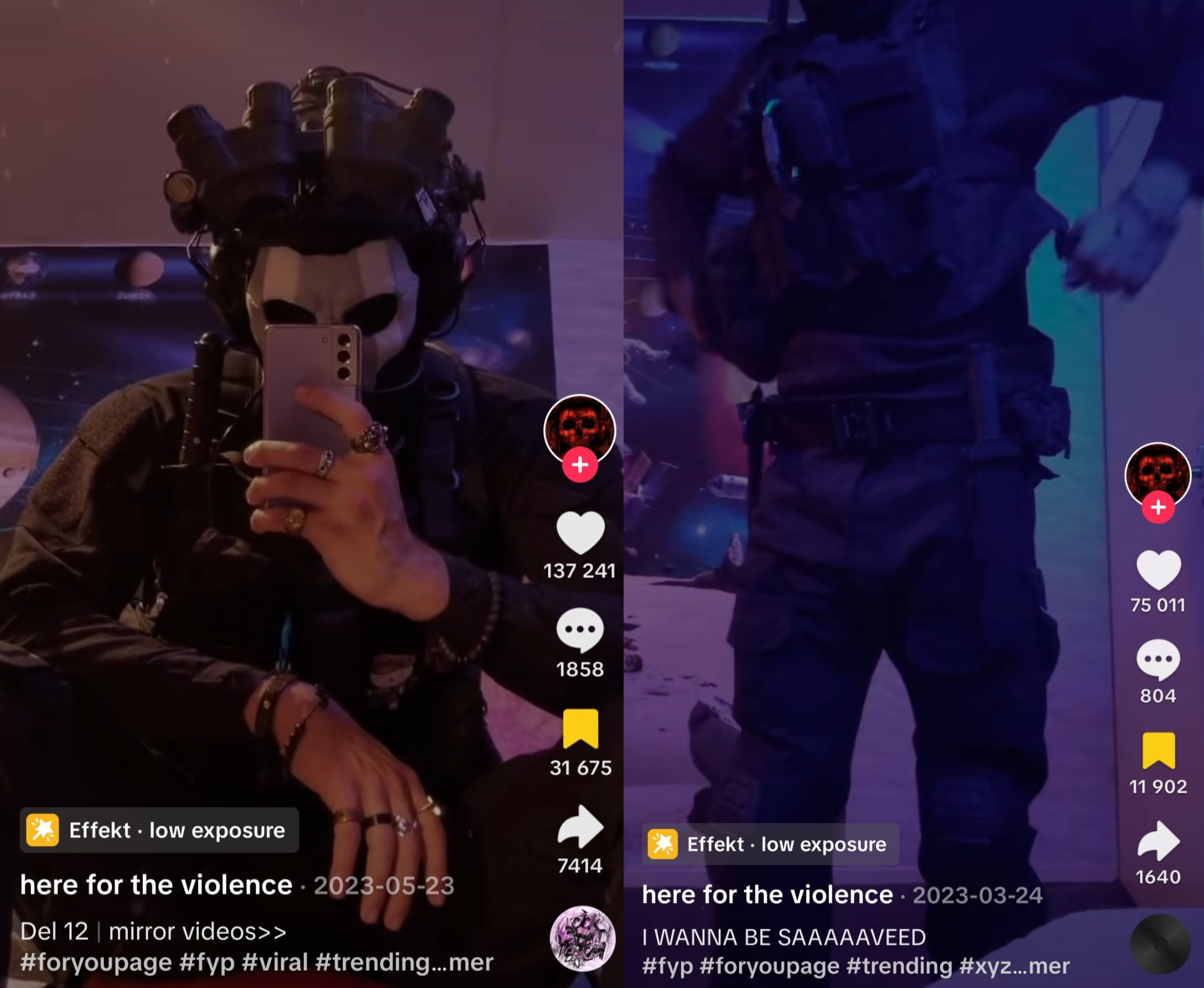
Figure 1. Cosplayer @idkshitssad/here for the violence uses music with explicit lyrics to key content with sexual tension. Used with permission.
[6.4] When using trending music to resignify content, the use of memetic music is also linked to specific performances. For example, the big boy trend invited TikTokers to use the song "Big Boys" or "Cuffing Season" from a Saturday Night Live sketch with the artist SZA making a reference to the physical size of men. The videos made to this music had creators emphasizing their (comparatively) large size by standing in doorways or holding certain objects, showing off both bulging muscles and soft, round bellies—depending on the TikToker. The music directs the user to lust for Ghost's appearance and characterization rather than to identify with or idolize him as a soldier avatar in a war game. Some of these songs have become iconic within the fandom, making belonging in it also about recognizing and relating to specific memetic sounds. By using sounds belonging to the fandom, the female and queer fans of Ghost on TikTok can make their content distinct from mainstream videos and create a side on TikTok for themselves that is both accepting and supportive of their fannish endeavors. We understand this as necessary not just for content to be meaningful and impactful but also for the fandom to be experienced as a community instead of only a personalized, algorithmically curated feed.
[6.5] It is key to note that soundbites are used to circumvent the platform's ban on noneducational sexual content (https://ads.tiktok.com/help/article/tiktok-ads-policy-adult-content). TikTok, like many other platforms, has opted to strongly limit and moderate any kind of sexual content, presumably to remain advertiser (and teenager, or perhaps parent) friendly. However, the platform appears to only moderate text, image, or spoken words in videos, not so much music. Consequently, content can be accompanied by music with very explicit sexual lyrics and still not be banned. This loophole is used by the fandom frequently. During our ethnographic observation, we found popular lyrics that describe sexual imagery emphasizing excess, physical intensity, and power play. Creative ways of getting around the platform's politics (Gillespie 2010) are plentiful on TikTok. Steen et al. (2023) refer to the spelling of lesbian as "le$bian" and sex as "seggs" as examples of algospeak, a strategically deployed way of talking to avoid moderation. We can understand the use of sexually loaded music as a similar form of circumvention of algorithmic moderation and a necessary strategy for fans in order to create and circulate the kind of sexually charged content that is pervasive in fandom.
[6.6] Seen together, the uses of memetic sound (both dialogue and music) are important ways in which creators gain inspiration for content and ways to participate in fandom. The need to address the algorithm as well as human audiences means content is directed toward shared trends that are legible for the algorithm through specific sounds in addition to being pleasing to the human ear. The music is used to transform Ghost's displays of military prowess to desired romantic and sexual qualities, though it also marks shared reference points and events in fandom. The fact that these are trends that encourage creators to remake content using their own body also changes cosplay as a type of fan work.
7. Theme 2: Visible meme creators and platformed bodies
[7.1] Our second category deals with TikTok's affordances for video creation and memetics and how these make cosplaying meme creators (and their bodies) visible. TikTok creation necessitates platformed bodies that act as signifiers of memetic fan content. Meme has previously been a format where the originator and sender are invisible, as memes seemingly come out of nowhere and are made by no one in particular. There are some counterexamples to this, as some people have gained celebrity due to their face or persona being memefied. A recent example can be found in the "Hawk Tuah Girl" (Haliey Welch) who quickly capitalized on her newfound fame through music, merchandise, and a podcast show (Craighead 2023). However, these instances have been rare, as memetic templates and iterations are usually made without a named or known creator. On TikTok, where people participate in trends by remaking content with their own bodies over trending soundbites, the users and creators of memes are now part and parcel of the memetic performance.
[7.2] In line with TikTok's platform vernacular that directs attention to personal and embodied experience, memetic performances are now also based on a visible and situated body. Divon and Krutrök (2024) describe the way TikTok emphasizes bodily presence as the "playful platformed body," a body that is "being platformed as it is designed by, for, and under platform-defined constraints" (4). Whether the Ghost cosplayer is sitting wide-legged on a chair, flexing their veiny arms, or making slapstick humor, this happens in a specific location (in a bedroom/car/garage/living room) and by exhibiting a distinct body.
[7.3] While the Call of Duty fandom on TikTok initially used footage from the game to create videos, it quickly evolved into an important arena for cosplay. Cosplay happens when fans "produce their own costumes inspired by fictional characters" and exemplifies well how fans "actualize fiction in daily life and identify with it" (Lamerichs 2011, ¶ 3.1). Creators dressed up as Ghost and made videos where they embodied the character in different ways (figure 2). While some cosplayers invested in expensive equipment, others simply wear the iconic skull mask Simon Riley is known for. Even if the cosplayers are all imitating and enacting the same character, they are visible as different bodies: thin, thick, tall, short, muscled, skinny, abled, and disabled. In this sense, Ghost is a recurring character across creations, but he is presented in different ways and means—making it about sameness rather than repetition, where small variations make content interesting. This was true for cosplay also before TikTok but is now an aspect that is highlighted due to the accessibility of cosplay and the sheer number of cosplayers made visible on the FYP.
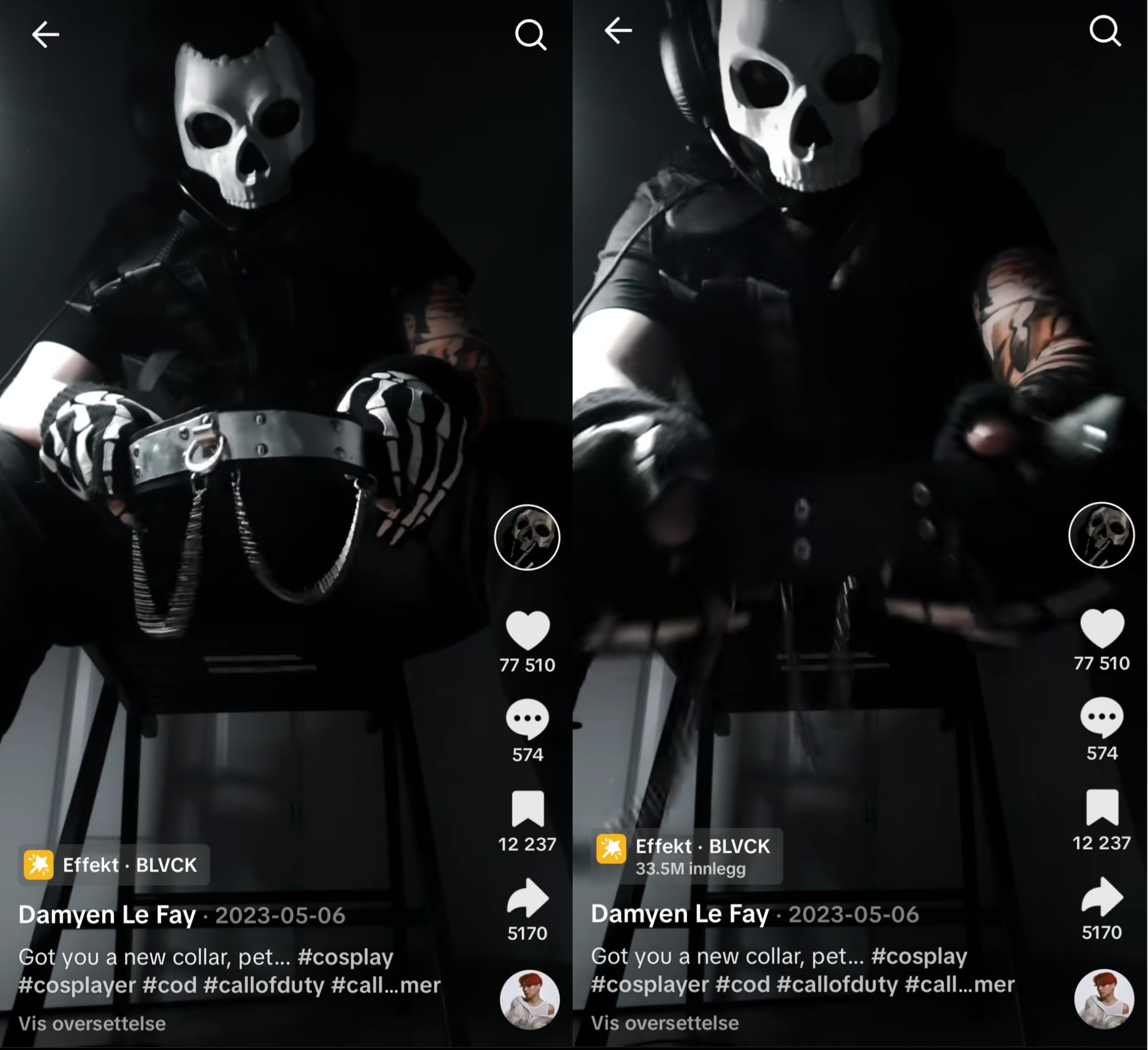
Figure 2. Cosplayer @damyenlefay/Damyen Le Fay embodies Ghost as dominant and sexually charged. Screenshot used with permission.
[7.4] Since the memetic performance includes an actual person, it also encourages interaction. Audiences comment and stitch (reply with a video) on individual cosplayers, at times creating their own subcommunities as fans of specific creators. This exemplifies how we should understand memes not just as units of culture but rather through the process of participation (Milner 2018). In the context of fandom, it also opens up new avenues for how to make content with and around cosplay, as cosplayers are not reliant on making original scenes or sketches if they want to make more narratively based social media content. Even if the video is a simple pose and eye contact with the audience, the strategic use of soundbites and music adds layers of meaning to the audience, which recognizes these sounds as important emotional signifiers. In this sense, the repetition offered through memetic communication is an act of enriching content through intertextual means.
8. Theme 3: Sameness and standardization through platform tools
[8.1] The third and final category guiding our analysis is about standardization and video editing tools, chosen to address the technological infrastructure that enables and shapes fandom on TikTok. So far we have addressed the TikTok algorithm and how video format changes visibility, but here we want to bring attention to TikTok's sister app CapCut, also owned by ByteDance, as an important driver of sound- and video-based meme creations.
[8.2] CapCut is a video editing app that has the standard features found in most video editing apps, but it also sports a template feature that sets it apart and makes it essential to TikTok and its memetic short-form video culture. The templates are made by users and ordered according to hashtags, sporting both free and premium (paid subscription) options. For example, there is the fan-favorite template that utilizes the memetic in-game dialogue between Soap and Ghost, where Soap asks if Ghost is ugly under the mask, and Ghost replies, "Quite the opposite." To use the template, all the user needs to do is select a given number of images, seconds of video, or text (decided by the template) (figure 3). The app does the work of matching edits/cuts to the music, for example by adding shaky cam or zoom effects to the beat, giving the overall impression of a high-quality video. In this sense, we can think of CapCut as similar to meme generators that are repositories of memetic images combined with simple tools for users to add their own text and variations.
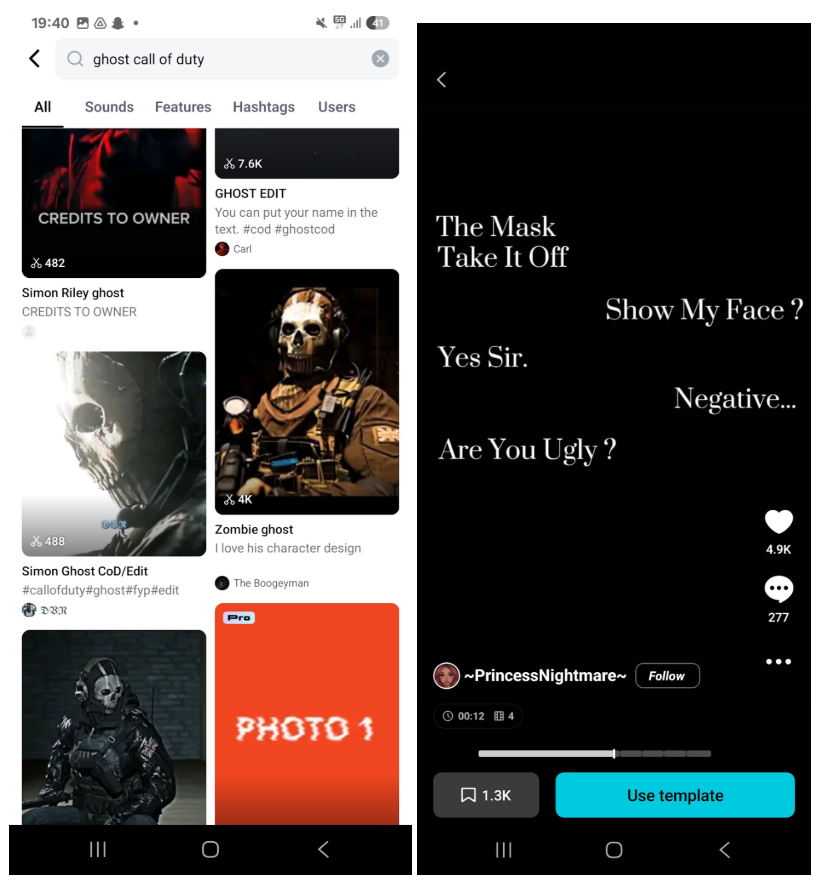
Figure 3. Screenshot illustrating the CapCut template.
[8.3] CapCut renders video editing into a simple and quick feat that doesn't rely on specialized knowledge or expensive editing tools. This means that fans can create and post videos at a much higher pace and greater volume than before. While it is a separate app, CapCut should be understood as an extension of TikTok, a key technology in the Actor-Network around it that fuels the production of content. This perspective links these tools irrevocably together, making them observable as interconnected platform tools (Mahetaji and Nieborg 2024). The strong link between the platforms is, among other things, visible in how it watermarks the video with CapCut if the user chooses to download the video to their own phone instead of directly exporting it onto TikTok.
[8.4] CapCut, through its reliance on templates, further emphasizes the memetic logics of TikTok, as they encourage video making to be based on trending sounds and clips. While it makes videos easier to produce, it also leads to standardization of expression as templates are reused across content. On the surface, the idea of fan content being standardized may seem unappealing. While these templates are also user generated, they offer a limited way of expressing fannish passion, exemplifying how standardization is always a tradeoff between ease and complexity. However, from the perspective of memetics, standardization is necessary for memetic content to function. Without likeness and adherence to the memetic standard, the message loses its meaning, as the intertextual links become too weak to carry the multilayered meanings that memetic communication relies on. On the other hand, if there is not enough variation, the meme goes stale and feels uninteresting. In the Call of Duty fandom, there are many examples of trends that grow popular and quickly feel overused, prompting fans to move on.
9. Discussion: The pleasures of repetition in memetic participation and communication
[9.1] As a short video platform with algorithmic curation, TikTok challenges many established notions about social media and online communities. We have shown how the platform directs content creation and interaction toward memetic logics and participation, where repetition and sameness across videos help both audiences and algorithms to tie things together. The shared characteristics found across content change the endless stream of videos presented on the FYP into groups of content, bound together by memetic formats, that are experienced as related and as continued social exchanges rather than as individual, short messages. A video of a cosplayer rolling their hip for the camera will have meaning in itself (and be quite legible for any audience), but the message is further enriched by being part of a trend where many creators engage in the same performance and the audience links all of these together. Instead of being based on a singular video, these trends become events that creators and audiences can participate in that add meaning and emotional connection. Due to repetition, fans can also relate to each other without having seen the exact same video, giving further opportunities for shared experiences without needing to have the same FYP. The memetic style of communication and creation binds together both the fans and the community as the individual videos coalesce into emotionally impactful trends and expressions.
[9.2] This richness is made possible by the crafty assemblages consisting of humans and nonhumans. Repetition through memetic means is not just an affordance for design of content on TikTok; it is part of the platform's internal infrastructure and the way it categorizes and distributes videos. The FYP algorithm on TikTok is a central nonhuman actor in this network, but it is only made effective if users make shared reference points through memetic means (e.g., sounds, hashtags) so that the multimodal content is distributed to the desired audiences. The assemblage is not just one of production and distribution of content; it is also a way to create and circulate certain emotions, as repetitive elements become signifiers of specific emotional states. Various trends and formats become emotional shortcuts that can be evoked again and again and used to deepen the affective bond between fans—and between fans and their chosen media or characters. This makes memetic participation well suited for fandom, as repetition and sameness are key ways in which fans deepen their emotional bond—and thus enjoyment—of their fannish objects.
[9.3] The exploration of memetic participation in a fandom on TikTok encourages us to think of other fannish work, such as fan fiction, in terms of memetics. In fan fiction both repetition and sameness are important. Fans deliberately seek out their favored genres, pairings, tropes, and situations through advanced taxonomies on sites like Archive of Our Own that allow fans to re-engage with similar stories over and over again. In the context of game fandom, repetition becomes even more central as gameplay is often repetitive in nature. For instance, players customarily need to replay levels because their character dies (Tosca 2023). In this sense, the repetitive aspects of memes fit well with existing logics and practices within game fandom and reject the idea that repetition and sameness in media are a sign of poor quality and unoriginality. Instead, we must pay attention to how repetition works to bind people, technologies, and meaning together using the memetic vernaculars available at different platforms.
10. Conclusion
[10.1] In this study we demonstrate how the Call of Duty fandom on TikTok is deeply interwoven with memetic logics and relies on memetic participation. From the use of memetic sounds as templates for creative works, we see how the platform directs users toward memetic contents to be visible for the algorithm. As a video-first and mobile-native platform, TikTok also encourages fan creators to be visible on-screen by enacting trends. Finally, the memetic nature of TikTok content is enabled and stabilized through associated platform tools such as the video editing app CapCut, which makes video editing easily accessible and materially tied to templates such as trending sounds. The analysis shows that memes are not just individual units of culture shared on the internet for a laugh. Instead, memetic logics and participation permeate content creation and community-building on TikTok and are shaping how fans remix and circulate their work. By paying attention to memetics, we gain a better understanding of the role of repetition and affective engagements in media—and in fandom.